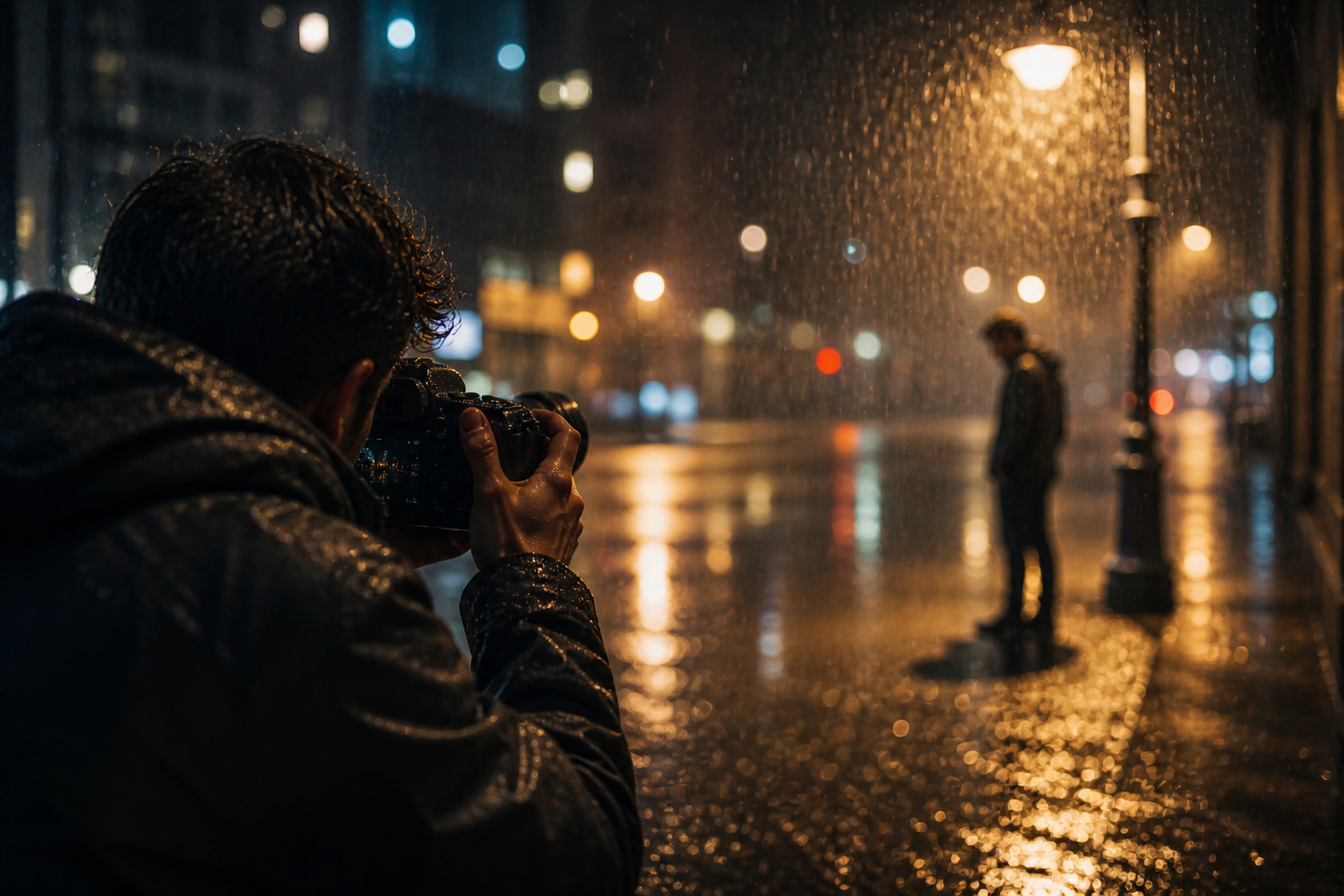
Have you ever looked at a still photograph and felt like you could hear the ambient noise of the street, smell the rain on the pavement, or feel the unspoken tension between two subjects? That is not just a photo; that is Cinematic Photography.
In an era where millions of “perfectly sharp” photos are uploaded every minute, cinematic photography stands out because it doesn’t aim for perfection—it aims for feeling. If you want your website to explode with traffic, you need to stop teaching people how to take “pictures” and start teaching them how to create “scenes.”
What Makes a Photo “Cinematic”?
The word “cinematic” is often overused, but at its core, it refers to an image that looks like a frame taken out of a high-budget movie. It’s characterized by a specific mood, a sense of narrative, and a deliberate use of light and color.
Unlike traditional portraiture, which focuses on the subject’s face, cinematic photography focuses on the environment and the subject’s relationship to it.
The Psychology of Lighting: Creating Drama
Lighting is the paintbrush of the cinematic photographer. To rank well on SEO, you must explain the “why” behind the “how.”
The Chiaroscuro Effect
Borrowed from Renaissance painters like Caravaggio, this technique uses strong contrasts between light and dark. In a cinematic shot, shadows are just as important as the light. Shadows hide details, creating mystery and allowing the human mind to fill in the gaps.
The Power of Backlighting (Rim Lighting)
Placing your light source behind the subject creates a “halo” effect, separating them from the background. This adds a 3-dimensional feel to a 2-dimensional medium.
Practical Lights
Cinematographers love “practicals”—lights that are visible within the frame (like a desk lamp, a neon sign, or a candle). These add a layer of realism and depth that a studio flash simply cannot replicate.
Composition: Breaking the “Rules” for Narrative
Most beginners are taught the Rule of Thirds. While effective, cinematic photography often pushes beyond it to create more complex emotions.
The Rule of Odds and Symmetry
Centering a subject can feel static, but in cinematic terms (think Wes Anderson), it creates a sense of authority or isolation.
Negative Space
Sometimes, leaving three-quarters of your frame empty (sky, a dark wall, or an out-of-focus street) tells a story of loneliness or the vastness of the world.
Dirtying the Frame
Cinematic shots often have something in the foreground—a leaf, a blurry window pane, or a shoulder. This makes the viewer feel like a “voyeur” or a fly on the wall, peeking into a private moment.
Aspect Ratios: The Widescreen Look
To get high traffic and rank on search engines like Google, your article needs to satisfy both the search algorithm (keywords, structure) and the human reader (emotion, relatability, value).
Since you asked for a “Human Mind” approach, this article is written to be conversational, deeply informative, and visually descriptive.
The Art of Visual Storytelling: A Masterclass in Cinematic Photography
Have you ever looked at a still photograph and felt like you could hear the ambient noise of the street, smell the rain on the pavement, or feel the unspoken tension between two subjects? That is not just a photo; that is Cinematic Photography.
In an era where millions of “perfectly sharp” photos are uploaded every minute, cinematic photography stands out because it doesn’t aim for perfection—it aims for feeling. If you want your website to explode with traffic, you need to stop teaching people how to take “pictures” and start teaching them how to create “scenes.”
1. What Makes a Photo “Cinematic”?
The word “cinematic” is often overused, but at its core, it refers to an image that looks like a frame taken out of a high-budget movie. It’s characterized by a specific mood, a sense of narrative, and a deliberate use of light and color.
Unlike traditional portraiture, which focuses on the subject’s face, cinematic photography focuses on the environment and the subject’s relationship to it.
2. The Psychology of Lighting: Creating Drama
Lighting is the paintbrush of the cinematic photographer. To rank well on SEO, you must explain the “why” behind the “how.
The Chiaroscuro Effect
Borrowed from Renaissance painters like Caravaggio, this technique uses strong contrasts between light and dark. In a cinematic shot, shadows are just as important as the light. Shadows hide details, creating mystery and allowing the human mind to fill in the gaps.
The Power of Backlighting (Rim Lighting)
Placing your light source behind the subject creates a “halo” effect, separating them from the background. This adds a 3-dimensional feel to a 2-dimensional medium.
Practical Lights
Cinematographers love “practicals”—lights that are visible within the frame (like a desk lamp, a neon sign, or a candle). These add a layer of realism and depth that a studio flash simply cannot replicate.
3. Composition: Breaking the “Rules” for Narrative
Most beginners are taught the Rule of Thirds. While effective, cinematic photography often pushes beyond it to create more complex emotions.
The Rule of Odds and Symmetry
Centering a subject can feel static, but in cinematic terms (think Wes Anderson), it creates a sense of authority or isolation.
Negative Space
Sometimes, leaving three-quarters of your frame empty (sky, a dark wall, or an out-of-focus street) tells a story of loneliness or the vastness of the world.
Dirtying the Frame
Cinematic shots often have something in the foreground—a leaf, a blurry window pane, or a shoulder. This makes the viewer feel like a “voyeur” or a fly on the wall, peeking into a private moment.
4. Aspect Ratios: The Widescreen Look
If you want your website visitors to immediately recognize your work as “cinematic,” you must talk about the Aspect Ratio.
Most cameras shoot in $3:2$ or $4:3$. However, movies are typically $16:9$ or even wider, like $2.35:1$ (Anamorphic). By cropping your photos or adding “letterbox” (black bars), you instantly trigger a psychological association with the big screen in the viewer’s brain.
Color Science: The “Teal and Orange” Obsession
Why do almost all Hollywood blockbusters use Teal and Orange? It’s not just a trend; it’s Color Theory.
Human skin tones generally fall in the orange/warm spectrum. On the color wheel, the direct opposite of orange is blue/teal. By making the shadows teal and the highlights (skin) orange, you create the maximum amount of color contrast, making the subject “pop” with intensity.
The Gear Myth: Why Your Phone is Enough
Many readers are intimidated by expensive gear. You can gain massive traffic by writing a section on Smartphone Cinematic Photography.
- Manual Apps: Mention apps like Halide or Filmic Firstlight that allow users to control shutter speed and ISO.
- Lens Attachments: Discuss anamorphic clips for phones that create those iconic horizontal lens flares.
Post-Processing: Where the Magic Happens
Cinematic photography is finished in the “Grade.”
- Grain: Adding a subtle film grain removes the “digital” look.
- Bloom/Mist: Softening the highlights to make them glow.
- HSL Sliders: Adjusting specific colors to create a cohesive palette.
Conclusion: Your Vision is the Director
At the end of the day, cinematic photography is about intentionality. It’s about deciding what stays in the frame and what is left to the imagination.
By sharing your personal journey, your “failed” shots, and your “aha!” moments on your blog, you build a human connection. People don’t follow cameras; they follow storytellers
Transform Your Vision into Cinema with The Focus Craft
A great film isn’t just watched; it is felt. Every frame, every shadow, and every ray of light is chosen to make you feel a specific emotion. At The Focus Craft, we believe your brand deserves that same cinematic depth. We don’t just take pictures—we direct scenes that capture the heart of your business.
From the quiet elegance of a luxury property to the vibrant energy of a live event, we bring a “big screen” aesthetic to every project.
Our Cinematic Services:
- Cinematic Real Estate Photography – We use dramatic lighting and wide-angle storytelling to make every room look like a set from a luxury film.
- High-Conversion Amazon Photos – Clean, sharp, and authoritative visuals that give your products the spotlight they deserve.
- The Human Touch (Hand Modeling) – Adding life and scale to your products through professional hand modeling that feels natural and intimate.
- Lifestyle Narrative Photography – We place your products in real-world “story” settings, creating an aspirational look that connects with your audience.
- Premium White Background Shots – Flawless, studio-lit imagery for e-commerce that demands attention through professional simplicity.
- Event Storytelling – Beyond just “coverage,” we capture the mood, the atmosphere, and the candid emotions of your most important moments.
From Concept to Canvas
Whether you are launching a new product, listing a flagship property, or hosting an unforgettable event, The Focus Craft is here to ensure your visuals don’t just look professional—they look legendary.