
How the Past 10 Years Changed How I Light Photos
An honest look at how my lighting approach evolved — and the lessons that transformed my photography
Lighting is the backbone of photography. Some say photography is light — and over the past 10 years, how I light my photos has evolved more than any other technical part of my craft. In this article, I’ll share the subtle and dramatic changes in my approach, what tools and techniques shaped them, and how you can apply the same lessons to your own work.
1. From Natural Light Only to Deliberate Light Shaping
Ten years ago, I relied heavily on available natural light — early morning sun, shade, or open shade on a cloudy afternoon. Back then, I trusted whatever light was there. I framed my composition and clicked.
Over time, I began to see light instead of just taking photos in light. I learned that light has direction, intensity, color temperature, and emotional impact — all of which can be controlled. Lighting for mood, not just exposure, became a priority. Natural light is still a starting point, but it’s now just one part of a toolkit I use to create the final image.
2. LED Panels and Continuous Light Over Flash
In the mid-2010s, I shot most portraits and studio work using speedlights and strobes. Flash was powerful and versatile — but it had limitations: unpredictable recycle times, harsh bursts, and the need for modifiers or gels just to tame it.
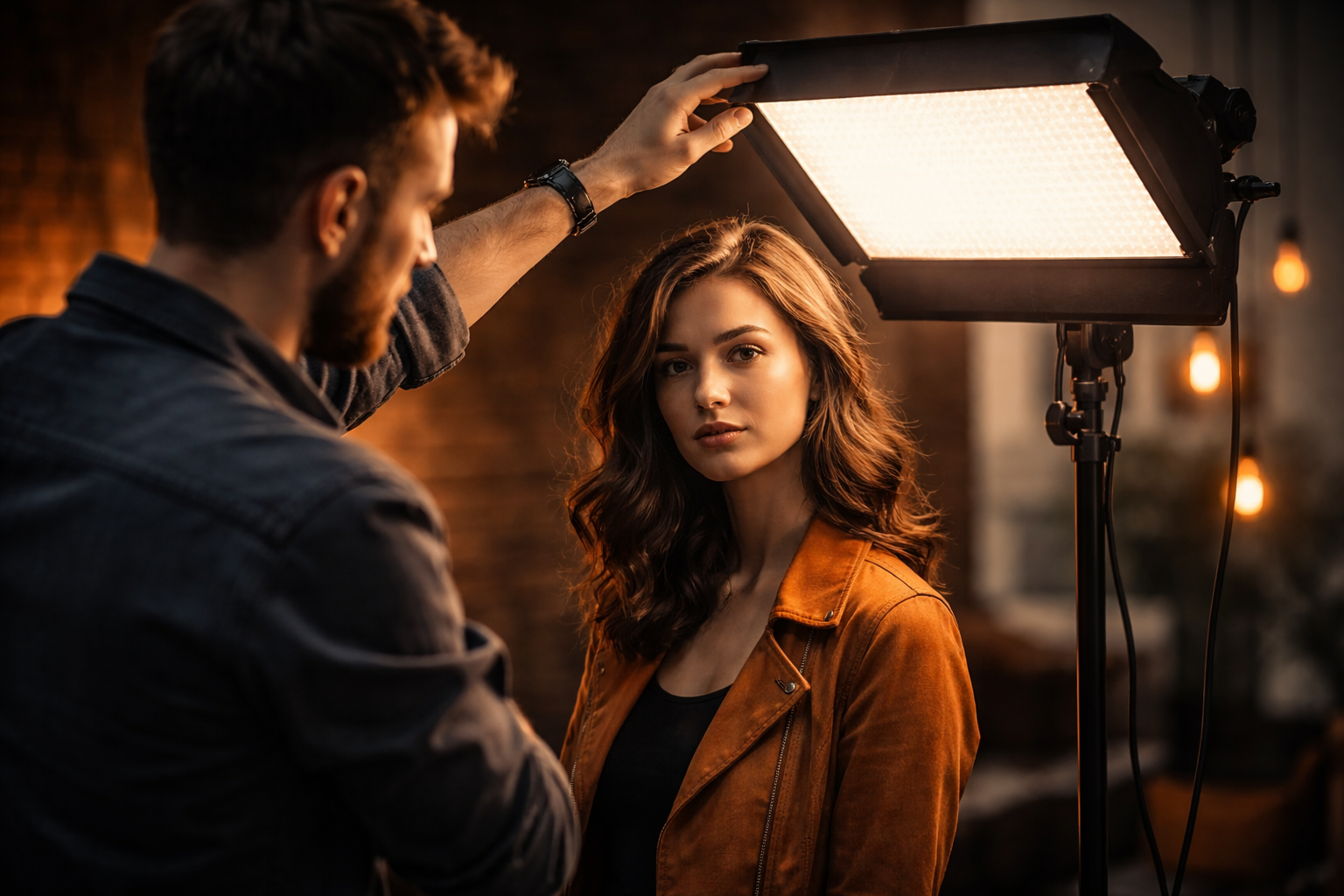
The last decade saw LED panels and continuous lighting become affordable, reliable, and powerful. These lights helped me see the lighting effect in real time instead of guessing and checking with small bursts of light. Continuous lighting also made mixed lighting (off-camera LED plus ambient, or LED plus flash) far easier. This shift allowed me to dial in my scene and see the final mood before taking the shot.
3. Modifier Technology Made Soft Light Easier
Ten years ago, my go-to modifiers were basic softboxes and umbrellas. Over time, modifier technology improved dramatically: magnetic gels, hex grids, egg crates, and collapsible reflectors for natural light fill became widely available.
These lightweight modifiers let me control light spread, contrast, and highlights quickly without heavy gear. The result? Cleaner portraits, moodier scenes, and far fewer lighting mistakes.
4. Mixed Light: Balancing Ambient and Artificial Light
A decade ago, ambient (natural) light and artificial light were almost separate worlds: shoot outdoors without flash, or shoot indoors with flash. Today, artists blend both.
This “mixed lighting” — combining daylight, strobes, and LEDs — gives nuanced control of highlights, shadows, and mood. It requires understanding how different sources interact and balancing them so one doesn’t overpower the frame. This approach unlocked creative looks that were difficult to achieve before.
5. Bigger Gear, Smaller Pack
A decade ago, studio work meant big lights and power packs. Now, battery-powered monolights give nearly the same power with lighter weight. Strobes and lights that once belonged in studios now travel in backpacks.
The rise of compact strobes and battery LED lights means I can bring sophisticated lighting anywhere — landscapes, urban portraits, documentary scenes — without compromise. This mobility changed how and where I light photos.
6. The Influence of Video on Photography Lighting
Video and stills used to be separate paths. But with social media, websites, and content marketing expanding, lighting designed for video (continuous light) influenced still photography lighting.
Today, cinematic lighting — using practical lights, LEDs, color gels, and careful light direction — has become standard even in still images. Instead of flat portrait lighting, photographers aim for storytelling lighting that feels like a still frame from a movie. This was almost unheard of a decade ago.
7. More Emphasis on Color Temperature and Mood
Modern sensors capture more dynamic range and color data, and photographers have learned to use that latitude creatively. Adjusting color temperature, adding colored lighting for mood, and using gels to sculpt color contrast are all now common artistic tools — not just technical tricks.
For example: adding warmer fill light to a sunset portrait or contrasting cool LED with warm streetlight during golden hour produces a much stronger emotional impact.
8. Learning From Masters and Online Education
Ten years ago, most learning came from printed books and workshops. Today, online tutorials, workshops, and communities make advanced lighting techniques accessible. I learned modified Rembrandt patterns, split lighting, backlighting, high-key/low-key contrast, and more through both free and paid resources — accelerating my learning curve faster than a decade ago.
FAQs — Common Questions About Lighting Evolution
❓ How important is lighting compared to camera gear?
Lighting is far more important than gear — the same camera with better light usually gives a strong photo, while the best camera with bad light often fails. Good lighting makes the photo.
❓ Do I need expensive lights to improve my lighting skills?
No. Start with reflectors, natural light, and inexpensive LEDs. Understanding light direction and quality matters more than gear brand.
❓ What is continuous light, and why use it?
Continuous light (like LED panels) lets you see lighting effects before taking a picture — great for shaping light and blending well with ambient light.
❓ Should I learn flash first or continuous light?
Start with continuous if you prefer seeing results in real time. If you shoot studio or high-speed action, learning flash is essential. Ideally learn both.
❓ Has digital photography changed lighting styles?
Absolutely — digital sensors handle ISO and exposure differently, giving more freedom to experiment with mixed lighting and cinematic looks.