
Mortgage Refinance Rates See a Noticeable Drop
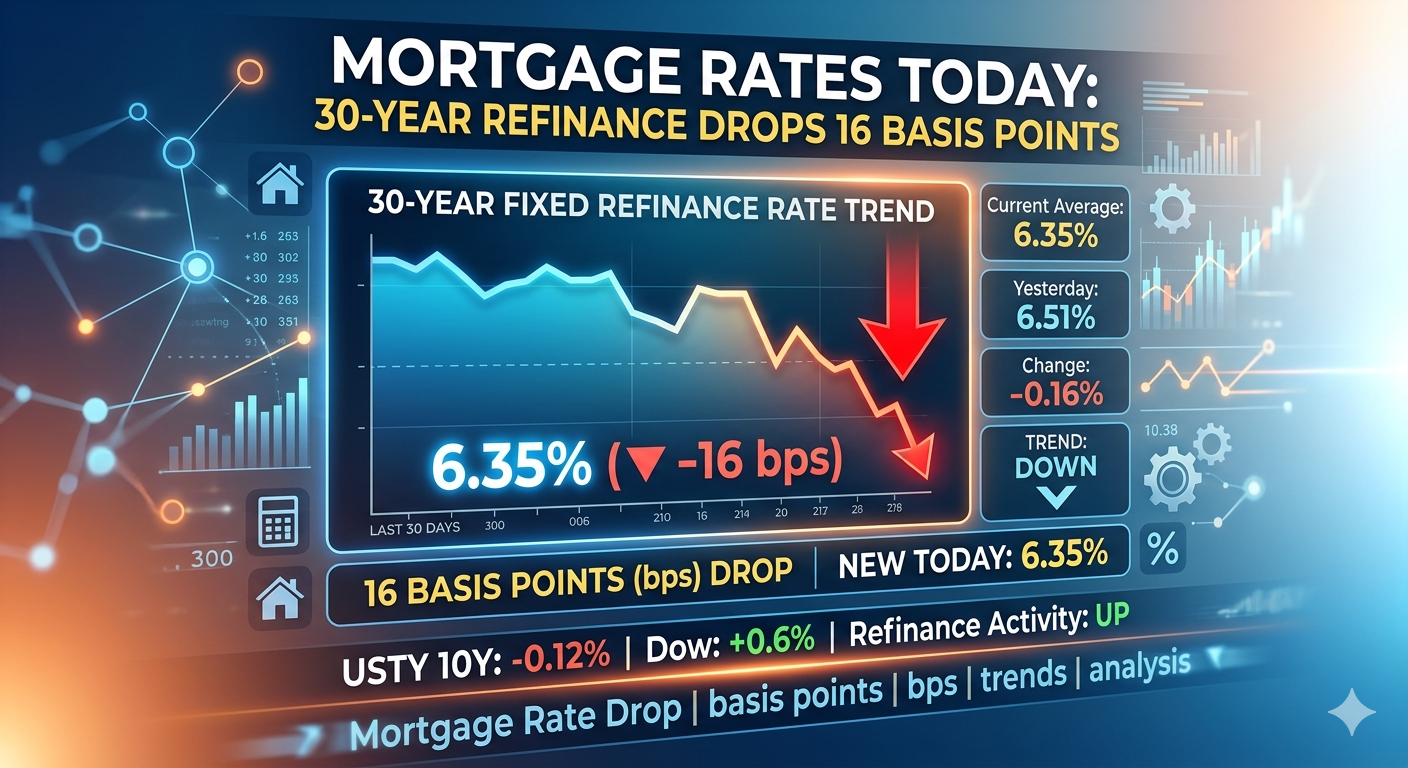
Mortgage refinance rates in the U.S. moved lower on June 14, 2026, with the 30-year refinance rate falling by about 16 basis points compared to recent levels. The decline signals a short-term easing in borrowing costs after weeks of relatively stable but elevated mortgage rates.
According to market data, the average 30-year refinance rate sits in the mid-to-high 6% range, reflecting ongoing pressure from inflation and Treasury yield movements. Even with this drop, rates remain significantly higher than the ultra-low levels seen in previous years.
Why Mortgage Rates Dropped
The decline in refinance rates is mainly driven by shifting bond market conditions and investor expectations around Federal Reserve policy.
Key factors include:
- Slight cooling in Treasury yields
- Market expectations of stable Fed interest rates
- Temporary easing in inflation pressure
- Increased competition among mortgage lenders
These combined factors have helped push refinance rates slightly lower, even though the broader trend remains uncertain.
Current 30-Year Mortgage Landscape
Despite the drop in refinance rates, the overall mortgage market remains relatively expensive for borrowers.
Recent estimates show:
- 30-year fixed mortgage rates hovering around the mid-6% range
- Refinance rates slightly higher than purchase mortgage rates
- 15-year refinance options remaining lower but still elevated
This means homeowners are still facing high borrowing costs compared to the pandemic-era lows.
Impact on Homeowners and Refinancing Activity
A drop in refinance rates typically encourages homeowners to reconsider refinancing options, especially those who locked in loans at higher rates.
Potential effects include:
- Increased refinance applications
- Monthly payment reductions for eligible borrowers
- Short-term boost in mortgage lender activity
- Selective refinancing based on credit strength and loan size
However, refinancing is still not beneficial for everyone due to closing costs and strict qualification requirements.
Housing Market Conditions
The broader housing market continues to feel pressure from high borrowing costs. Elevated mortgage rates have:
- Reduced affordability for new buyers
- Slowed home sales activity
- Increased reliance on seller incentives
- Kept housing demand below typical seasonal levels
Even with minor rate drops, affordability remains a major challenge.
What Could Happen Next
Mortgage rates are expected to remain sensitive to economic data in the coming weeks.
Future movement will depend on:
- Inflation reports
- Federal Reserve policy decisions
- Treasury yield trends
- Labor market strength
- Global geopolitical stability
Any major shift in these areas could quickly change refinancing conditions.
Conclusion
The 16 basis point drop in 30-year refinance rates offers slight relief for borrowers, but overall mortgage costs remain high by historical standards. While refinancing activity may pick up modestly, sustained improvement in affordability will depend on broader economic trends and future interest rate decisions.
FAQs
What happened to mortgage refinance rates on June 14, 2026?
They dropped by around 16 basis points, reflecting a short-term easing in borrowing costs.
Are mortgage rates going down overall?
Rates have slightly declined in recent weeks but remain elevated compared to historical averages.
What is the current 30-year mortgage rate range?
It is generally in the mid-6% range depending on lender and borrower profile.
Is now a good time to refinance?
It depends on your existing rate, credit score, and whether savings outweigh closing costs.
Why do mortgage rates change?
They are influenced by inflation, Treasury yields, Federal Reserve policy, and market demand.
Will mortgage rates fall further?
Future movement depends on economic data and Fed decisions, so further declines are possible but not guaranteed.
Stay Ahead in Creative Trends
At The FocusCraft, we believe design goes beyond aesthetics—it’s about understanding cultural and economic shifts that inspire creativity.
Stay ahead of the creative curve.
Subscribe to our newsletter for insights on design, innovation, and creative trends shaping tomorrow.