
Photographer Captures Rare Comet Over Lancaster Sculpture – Skywatchers in Seattle and Nearby Cities Amazed
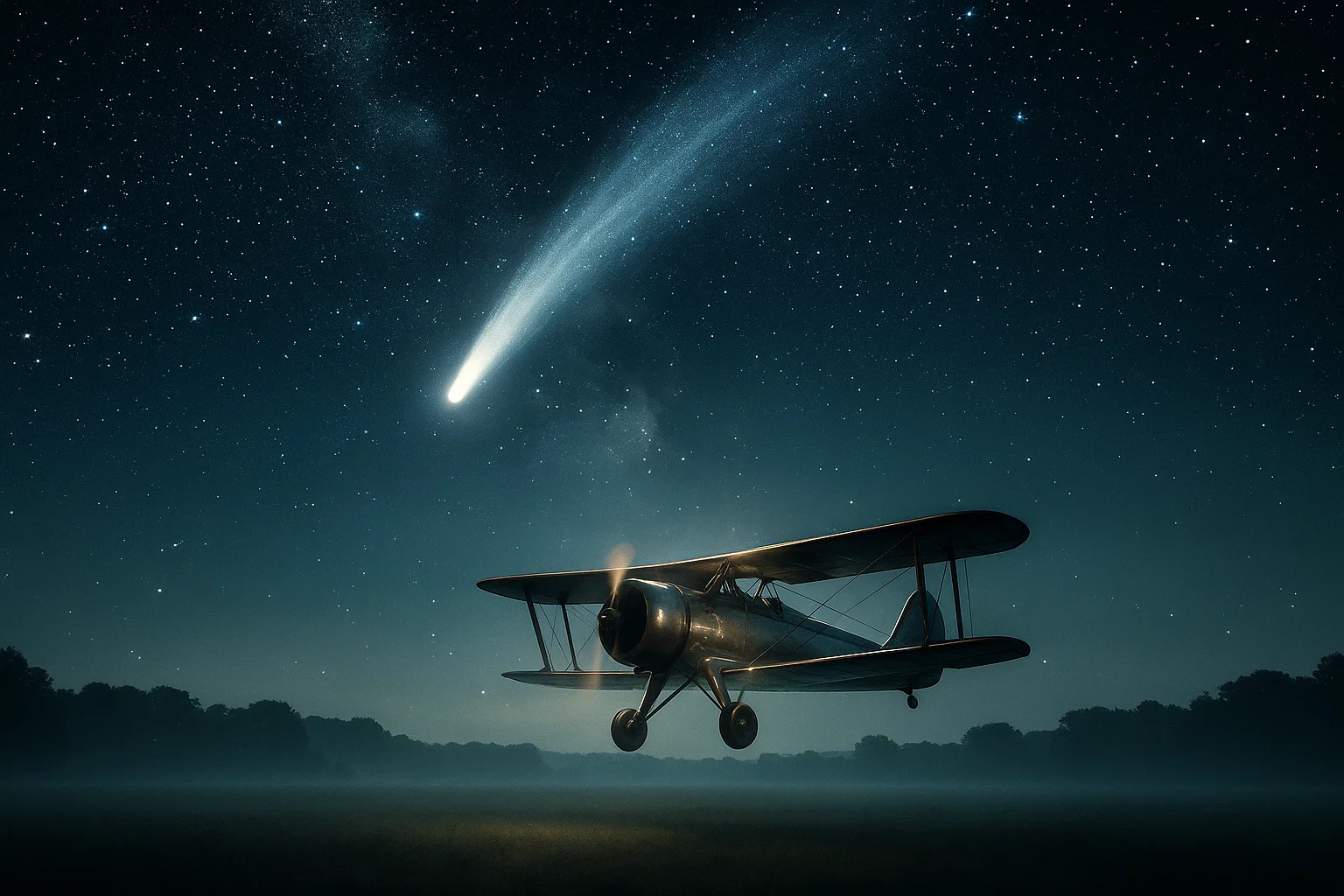
Photography lovers and skywatchers across Seattle, Bellevue, Kirkland, and Puyallup have been buzzing about a breathtaking moment recently captured on camera. A Lincolnshire-based photographer, Steve Fearn, managed to photograph the rare Comet C/2025 A6 (Comet Lemmon) glowing over the Lancaster bomber sculpture in Norton Disney. The image quickly went viral online, drawing attention from photography communities in Washington State and beyond.
The photograph showcases the brilliant blue glow of Comet Lemmon streaking across the night sky above On Freedom’s Wings, a life-size sculpture honoring Royal Air Force crews who served during World War Two. The fusion of historical art and cosmic wonder created a one-of-a-kind visual moment that resonated deeply with photographers and space enthusiasts alike.
A Celestial Moment Above a Symbol of History
Steve, 52, described the experience as nothing short of magical. “It was quite a buzz capturing something so unique,” he said. The photo didn’t just feature the comet — a faint line across the sky caught viewers’ eyes as well. Steve believes it was fuel released from a SpaceX rocket, adding a surprising modern twist to the cosmic scene.
Comet Lemmon was first detected in January 2025 by astronomers from the Mount Lemmon Survey in Arizona. Since then, it’s become one of the most talked-about celestial events of the year. The comet made its closest approach to Earth on October 21, passing just 56 million miles (about 90 million kilometers) away. For a few short weeks, it has been visible in the night sky, glowing faintly in the constellation Pegasus — and those in Seattle and nearby Washington areas have been keeping their eyes open for a glimpse.
“The comet’s blue ion tail is just stunning,” Steve said. “It’s different from anything I’ve seen before, and to capture it over such a meaningful sculpture made the shot unforgettable.”
The Skill and Science Behind the Shot
Astrophotography isn’t just about luck — it’s about timing, patience, and technical mastery. Steve used a tracking mount, a device that compensates for the Earth’s rotation, keeping the comet in perfect focus during long exposures. “Without it,” he explained, “the comet and stars would blur. You need precision equipment and a bit of luck with the weather.”
And luck was certainly needed. Overcast skies and unpredictable conditions made it difficult to photograph the comet in recent weeks. “The weather almost ruined my chances,” he admitted, “but I waited, kept checking the forecast, and finally had one perfect night.”
Steve has captured celestial wonders before — including Comet Neowise and Comet Atlas — and each experience, he said, pushes him to look deeper into the universe through his lens.
The Rise of Night Sky Photography in Washington
In Washington State, particularly around Bellevue, Kirkland, Seattle, and Puyallup, the night sky has become a favorite subject for local photographers. With stunning backdrops like the Cascade Mountains and Lake Washington, the region provides ideal conditions for night sky photography.
Amateur photographers have started joining community groups and workshops focusing on astrophotography techniques. From capturing meteor showers over Lake Sammamish to photographing lunar eclipses over Mount Rainier, the Pacific Northwest has quietly become one of the best regions for sky enthusiasts in the U.S.
Steve’s image is more than a beautiful picture — it’s a reminder of how creativity and science come together. It shows that the universe isn’t far away; sometimes, it’s just above your roof waiting for you to look up.
A Symbolic Scene That Blends Art and Astronomy
The sculpture featured in Steve’s photograph — On Freedom’s Wings — was built to honor the bravery and sacrifice of RAF crews during World War Two. Seeing the comet sweep above it gave the photograph a deeper, symbolic meaning. It represented history meeting the cosmos, past meeting present, and humanity’s eternal curiosity reaching beyond Earth.
As images of the comet spread online, Washington-based photographers began sharing their own attempts to capture the same celestial visitor. Many posted on social media with hashtags like #SeattleSkywatch, #CometPhotography, and #FocusCraftStories, building excitement among local stargazers.
For many residents of Bellevue and Kirkland, the image has been a reminder of the beauty that lies just beyond the city lights. Even those who don’t usually follow astronomy found themselves stepping outside at night to catch a glimpse of Comet Lemmon.
What Makes Comet Lemmon So Special?
Comet Lemmon’s distinct blue ion tail is caused by charged particles interacting with solar radiation. As the comet approaches the Sun, its icy surface releases gas and dust, creating the iconic glowing tail. Scientists and photographers alike were drawn to its rare brightness, making it a prime subject for observation and photography.
Astronomers say Comet Lemmon will remain visible until early November before fading away as it travels deeper into space. Those in Washington’s darker areas — away from city light pollution — still have a chance to spot it with binoculars or long-exposure camera setups.
FAQs
It’s a recently discovered comet identified in January 2025 at the Mount Lemmon Observatory in Arizona. Its striking blue tail makes it one of the most visually beautiful comets in recent years.
The photo was taken by Steve Fearn, a photographer from Lincolnshire, who specializes in astrophotography.
It’s best visible from darker spots outside major cities like Seattle, Bellevue, and Puyallup, during clear evenings in early November.
A stable tripod, tracking mount, and long-exposure settings are essential to track the comet’s movement and prevent blurring.
It beautifully connects two worlds — a historical monument on Earth and a cosmic visitor from space — captured with precision and artistry.
Capture the Sky with The Focus Craft
Love chasing stories that blend creativity and wonder? At The Focus Craft, we bring you the latest photography news, cosmic captures, and visual storytelling from Washington and beyond. Whether it’s a rare comet, a stunning night sky, or creative trends shaping the world of photography, we’re here to keep your inspiration alive.
Stay connected with The Focus Craft — where today’s news meets tomorrow’s creativity.
The Focus Craft – Your Daily Source for Photography, Art, and Skywatching Inspiration.