
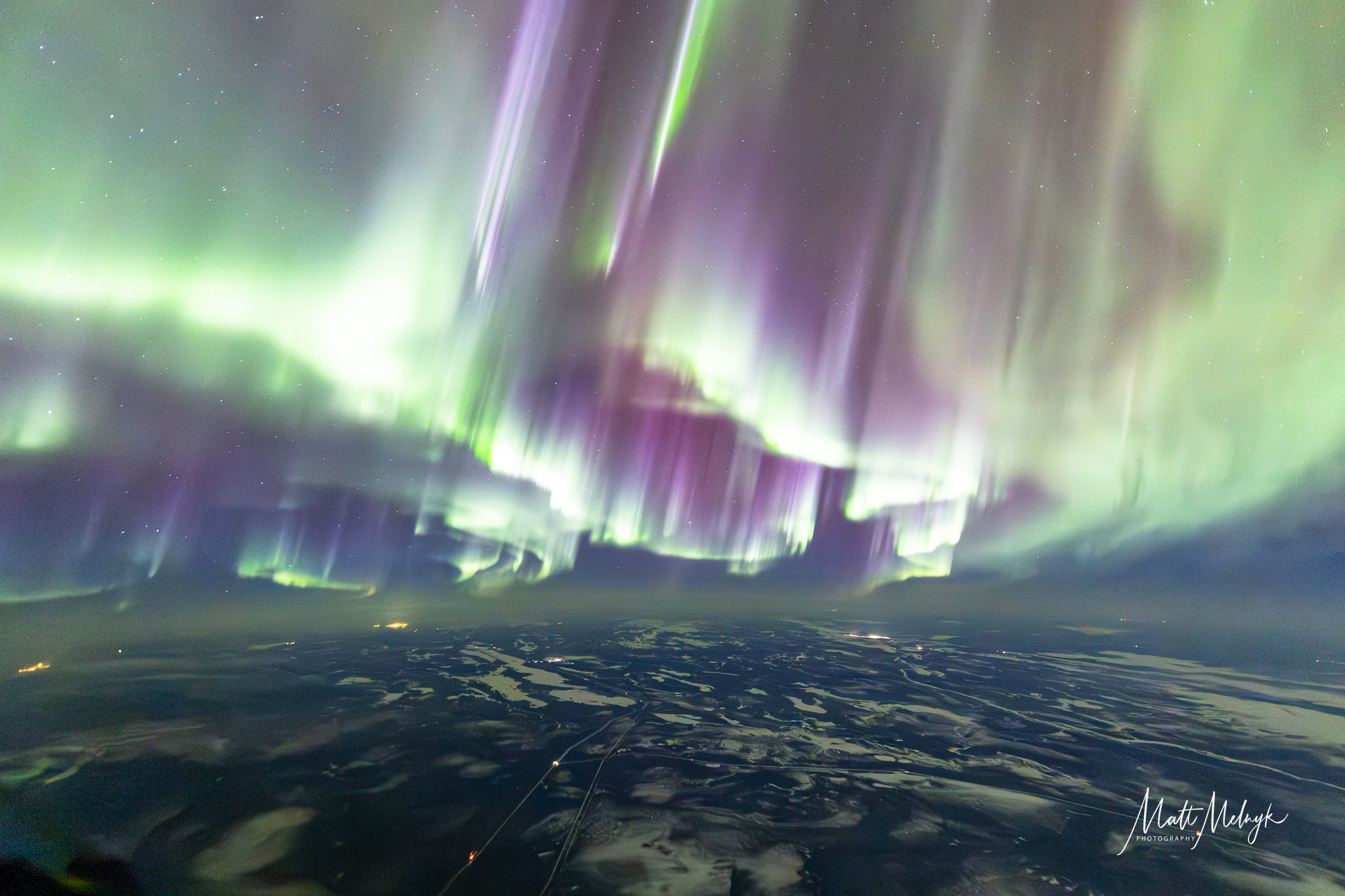
“The Most Incredible Display of Aurora I’ve Ever Seen in My 20 Years of Flying”: Pilot Captures Historic Northern Lights Show From 37,000 Feet
A commercial airline pilot flying at cruising altitude witnessed what he described as “the most incredible display of aurora I’ve ever seen in my 20 years of flying.” From nearly 37,000 feet above Earth, the cockpit view transformed into a sweeping panorama of glowing colors as an intense northern lights event illuminated the night sky.
The rare spectacle unfolded during a period of heightened solar activity, producing one of the most breathtaking northern lights displays observed in recent years. Photographs captured from the aircraft quickly spread across astronomy and aviation communities, offering a unique perspective of a phenomenon usually seen from remote, ground-based locations.
A View Few Ever Experience
Seeing auroras from the ground already feels magical, but witnessing them from an aircraft adds an entirely different dimension. Many travelers ask, “can you see the aurora borealis from an airplane?” According to experienced pilots and astronomers, the answer is yes — but only under the right conditions.
High altitude, minimal light pollution, clear skies, and strong geomagnetic storms all play critical roles. At 37,000 feet, the pilot’s aircraft flew above clouds and weather systems, providing a crystal-clear view of the real aurora borealis dancing across the horizon.
From this vantage point, the aurora appeared wider, brighter, and more structured than what is typically visible from the ground. Curtains of green and purple light stretched across the curvature of Earth, forming arcs that shifted and pulsed in real time.
Solar Activity Behind the Historic Display
Scientists attribute the event to an intense burst of solar energy interacting with Earth’s magnetic field. A powerful solar flare northern lights event sent charged particles toward the planet, triggering geomagnetic disturbances strong enough to push auroral activity far beyond its usual polar boundaries.
Data collected from space-based monitoring systems confirmed heightened activity levels. NOAA satellite aurora photos taken during the same time frame revealed a massive auroral oval expanding across the Northern Hemisphere.
Such conditions rarely align so perfectly, making this display exceptional not only for its beauty but also for its scientific significance.
Capturing the Northern Lights From the Cockpit
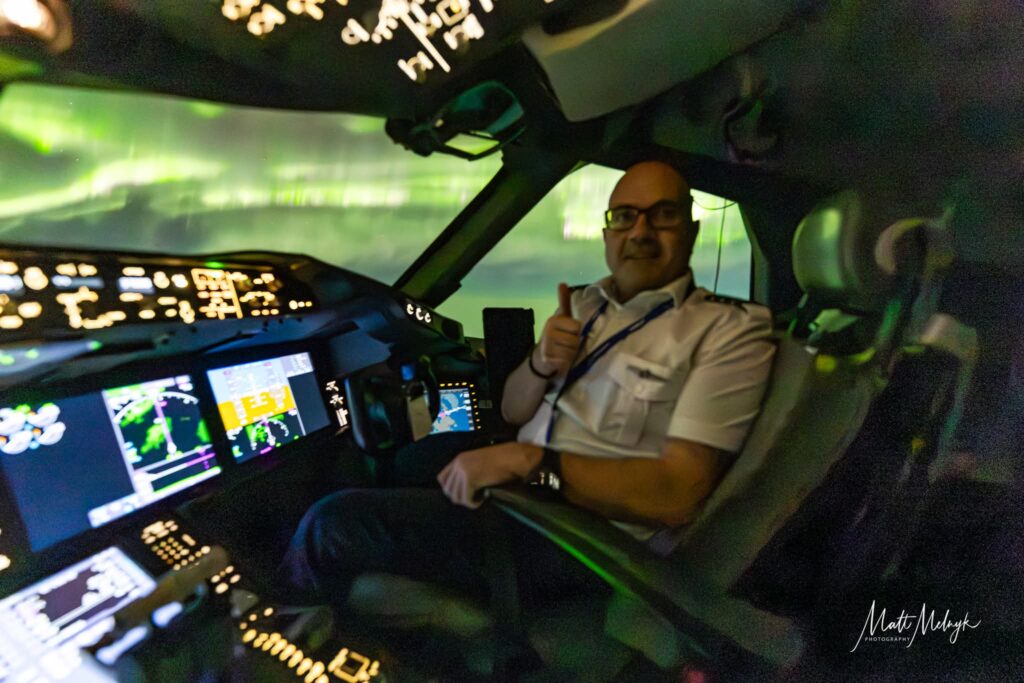
Photographing auroras from a moving aircraft presents unique challenges. Vibration, window reflections, low light, and high speeds can complicate even professional photography. Still, the pilot managed to capture a series of stunning images that showcased vivid colors and fine detail.
For those wondering how to take pictures of aurora borealis, experts suggest using a camera capable of manual settings, high ISO sensitivity, and longer exposure times. In the air, pilots rely on steady hands, adjusted shutter speeds, and careful positioning to avoid glare from cockpit lighting.
The resulting images revealed sweeping green ribbons layered with hints of magenta and violet, proving that extraordinary photography can emerge even from unexpected environments.
Why Auroras Look Different From the Air
Auroras form when charged solar particles collide with gases in Earth’s upper atmosphere. Oxygen produces green and red hues, while nitrogen creates purples and blues. From the ground, viewers usually see auroras as vertical curtains or arcs near the horizon.
From an aircraft, however, the perspective changes dramatically. Flying above much of the atmosphere allows observers to see the full scale of the auroral structure. The north lights appear broader, more continuous, and often brighter because the observer sits closer to the altitude where auroras form.
This elevated viewpoint also reduces atmospheric distortion, enhancing clarity and color saturation.
Aviation Meets Astronomy
Events like this highlight the growing overlap between aviation and space science. Pilots frequently report meteor sightings, lightning storms, and unusual atmospheric phenomena that remain invisible from the ground.
This aurora encounter has become a major moment in astronomy news northern lights, offering researchers and enthusiasts alike a rare visual dataset from an unusual angle. Scientists value such firsthand accounts, as they complement satellite imagery and ground-based observations.
The pilot’s decades of experience added credibility to the claim that this was no ordinary auroral display.
Public Fascination With Northern Lights Grows
Interest in auroras has surged in recent years as solar activity increases and social media amplifies rare sightings. Many travelers now plan trips specifically to witness the breathtaking northern lights, while others hope to catch a glimpse during nighttime flights over polar routes.
Airlines have even reported passengers dimming cabin lights to improve visibility during known auroral events. Though sightings are never guaranteed, moments like this fuel public fascination and curiosity about space weather.
A Reminder of Earth’s Dynamic Sky
Beyond their beauty, auroras serve as visible reminders of Earth’s relationship with the sun. Solar storms that produce spectacular light shows can also disrupt satellites, GPS signals, and power grids.
Experts stress that monitoring solar activity remains essential, not only for scientific research but also for protecting modern infrastructure. Events that generate extraordinary auroras often coincide with stronger geomagnetic conditions that require close observation.
A Once-in-a-Lifetime Experience
For the pilot, the experience represented a career-defining moment. After thousands of flight hours and countless night skies, the aurora display stood apart from anything previously encountered.
Moments like these underscore why aviation professionals often describe their work as more than just a job. From meteor showers to glowing auroras, the sky continues to surprise even those who spend their lives above the clouds.
As solar cycles progress and activity intensifies, more historic displays may occur. Still, witnessing such a phenomenon from 37,000 feet remains an extraordinary privilege — one that few will ever experience firsthand.
FAQ – Northern Lights From the Air
Can you see the aurora borealis from an airplane?
Yes, under strong solar activity and clear skies, auroras can be visible from aircraft, especially on high-latitude routes.
Do auroras look brighter from the air?
Often they do, because aircraft fly closer to the altitude where auroras form and above atmospheric distortion.
What causes intense northern lights displays?
Strong solar flares and geomagnetic storms increase charged particles interacting with Earth’s atmosphere.
Turn Moments Into Powerful Visual Stories With TheFocusCraft
TheFocusCraft delivers professional photography services designed to elevate brands, properties, and personal milestones with clarity and authenticity.
Our Core Services:
- Real Estate Photography
High-impact property visuals that highlight space, lighting, and details to attract buyers and renters faster. - Wedding Photography
Emotion-driven wedding photography that captures real moments, genuine expressions, and timeless memories. - Product Photography
Clean, high-quality product images crafted for e-commerce, branding, and marketing that build trust and drive conversions.
Every shoot focuses on precision, storytelling, and visual credibility.
Explore Professional Photography Services at TheFocusCraft.com