Art has always been a way for humans to express ideas, emotions, and creativity. From paintings on cave walls to modern digital illustrations, art has evolved with time. Now, a new form of creativity is growing fast — AI art.
AI art is changing how people create, think, and experience visuals. It allows anyone, even without traditional artistic skills, to generate unique images using artificial intelligence. In 2026, AI art is becoming more common in design, marketing, photography, and digital content.
This guide explains what AI art is, how it works, and why it is becoming an important part of modern creativity.
What is AI Art?
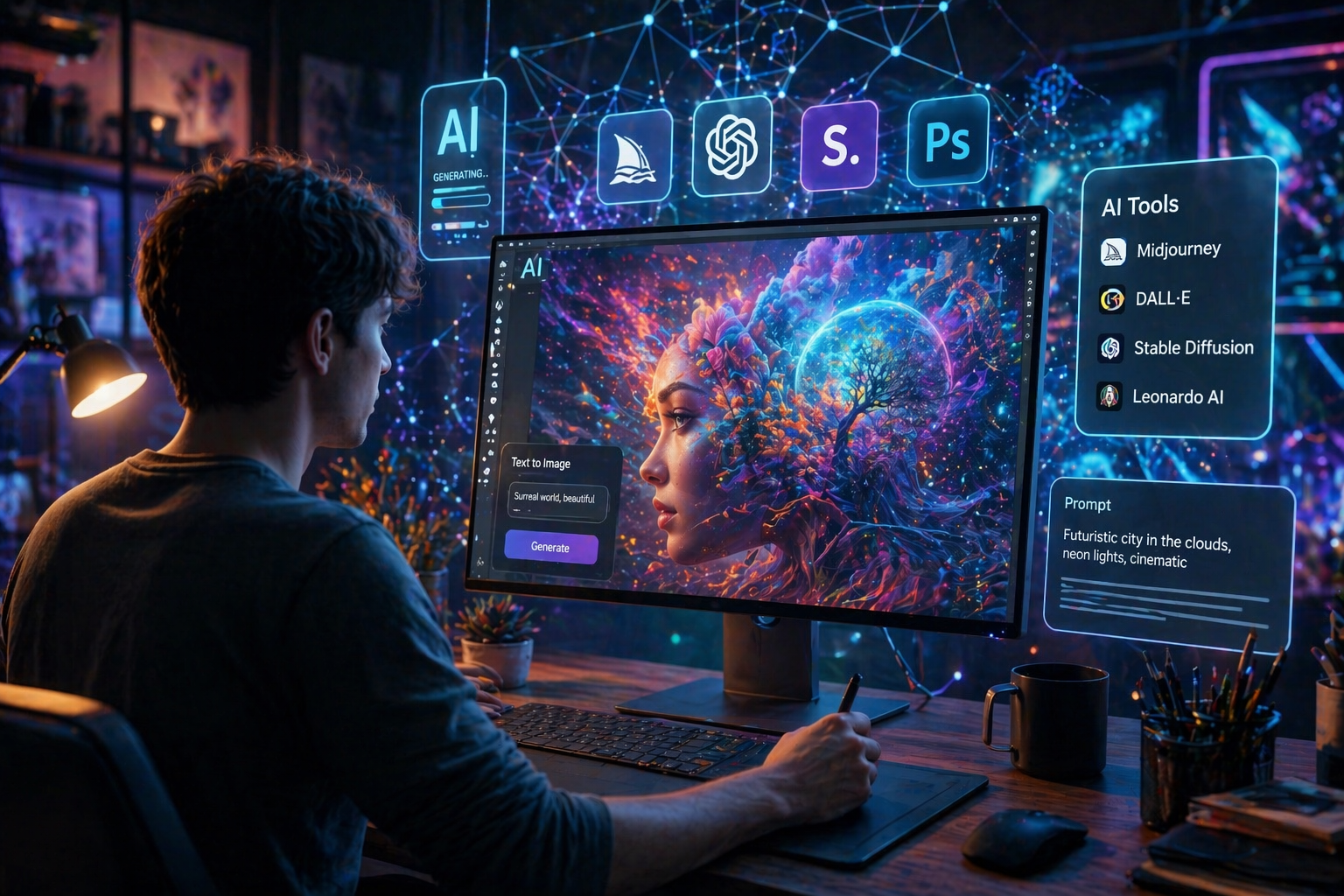
AI art refers to artwork created with the help of artificial intelligence. Instead of drawing or painting manually, users give instructions to AI tools, and the system generates images based on those inputs.
These instructions are often called “prompts.” A simple text description can turn into a detailed image within seconds.
For example, someone can type:
“a modern house at sunset with cinematic lighting”
The AI tool will create an image based on that idea.
AI art combines technology and creativity. It does not replace human imagination but supports it.
How AI Art Works
AI art tools are trained using large datasets of images. These systems learn patterns, styles, and details from millions of examples.
When a user enters a prompt, the AI analyzes it and creates a new image by combining learned patterns.
The process includes:
- Understanding the text prompt
- Matching it with visual data
- Generating a unique image
The result is often detailed and realistic, depending on the prompt and tool used.
Popular AI Art Tools
Many AI tools are available today. Each tool has its own style and features.
Some popular AI art tools include:
- DALL·E
- MidJourney
- Stable Diffusion
- Leonardo AI
These tools are widely used by designers, marketers, and content creators.
Some tools focus on realistic images, while others create artistic or abstract visuals.
Why AI Art is Becoming Popular
AI art is growing quickly because it is easy to use and saves time.
Accessibility
Anyone can create art without professional skills. This makes creativity more open to everyone.
Speed
Images can be created in seconds. This helps in projects where time is limited.
Cost Efficiency
Hiring designers can be expensive. AI tools provide a more affordable option for simple tasks.
Creative Freedom
Users can experiment with ideas without limits. Different styles and concepts can be explored easily.
Uses of AI Art
AI art is used in many industries. It is not limited to artists only.
1. Marketing and Advertising
Businesses use AI-generated images for ads, social media, and campaigns.
2. Content Creation
Bloggers and creators use AI images for thumbnails, articles, and visuals.
3. Product Design
AI helps in creating product concepts and mockups.
4. Real Estate and Architecture
AI can generate visual concepts of properties and design ideas.
5. Gaming and Entertainment
Game developers use AI art for characters, environments, and scenes.
AI Art in Photography and Editing
AI art is also influencing photography. Tools now help in editing photos, enhancing images, and creating new visual effects.
For example:
- Background replacement
- Lighting adjustments
- Style transformation
Photographers can improve images faster and experiment with new ideas.
Benefits of AI Art
AI art offers many advantages.
Easy to Use
No advanced skills are required. Simple prompts can generate complex images.
Time Saving
Design work that used to take hours can now be done in minutes.
Creative Exploration
Users can try different styles without restrictions.
Scalability
Businesses can create multiple visuals quickly for different needs.
Limitations of AI Art
Despite its benefits, AI art has some limitations.
Lack of Human Emotion
AI-generated art may not always capture deep emotions.
Dependence on Prompts
The quality of the image depends on how well the prompt is written.
Originality Concerns
AI learns from existing data, which can raise questions about originality.
Editing Limitations
Some details may require manual editing for perfection.
Ethical Considerations in AI Art
AI art raises important questions.
- Who owns the artwork?
- Is it fair to use data from other artists?
- How should AI-generated content be used?
These discussions are ongoing, and rules are still developing.
Tips for Creating Better AI Art
To get better results, follow simple tips:
- Use clear and detailed prompts
- Mention style, lighting, and mood
- Experiment with different keywords
- Keep prompts simple at first
- Adjust and refine based on results
Practice helps improve outcomes.
AI Art Trends in 2026
AI art continues to evolve. Some key trends include:
Hyper-Realistic Images
AI tools now create images that look almost real.
Personalized Content
Users can generate images tailored to their needs.
Integration with Other Tools
AI art tools are being combined with design and editing software.
Growth in Commercial Use
Businesses are using AI art more for branding and marketing.
Future of AI Art
The future of AI art looks promising. Technology will continue to improve, making tools more powerful and accessible.
Human creativity will still play a major role. AI will act as a support tool rather than a replacement.
Artists, designers, and creators will use AI to enhance their work and explore new ideas.
AI Art vs Traditional Art
There is often a debate between AI art and traditional art.
Traditional art:
- Requires manual skill
- Takes time
- Reflects personal experience
AI art:
- Uses technology
- Is faster
- Depends on prompts
Both forms have value and can exist together.
Conclusion
AI art is transforming the creative world. It makes art more accessible, faster, and flexible. From marketing to photography, its use is growing across industries.
While it has some limitations, its benefits are clear. With the right approach, AI art can become a powerful tool for creators and businesses.
Understanding how to use AI art effectively can open new opportunities in design and content creation.
Create Smarter Visuals with AI & Professional Photography
Visual content is changing fast. Today, businesses are not only using traditional photography but also combining it with modern AI tools to create more engaging and high-quality visuals. The right mix of creativity and technology can make your brand stand out.
At The Focus Craft, we bring together professional photography and modern visual techniques to deliver images that look clean, natural, and impactful.
Our Services Include:
- Real Estate Photography – High-quality property images enhanced with modern editing techniques
- Amazon Product Photos – Clean and optimized visuals designed for better product presentation
- Hand Modeling Product Photography – Natural interaction shots that add depth and realism
- Lifestyle Product Photography – Creative visuals that connect with real-life usage
- White Background Product Photography – Simple, sharp images ideal for eCommerce platforms
- Event Photography – Capturing real moments with clarity and detail
By combining professional photography with the latest visual trends, we help businesses create images that not only look good but also perform better.
If you’re looking to upgrade your visuals with a modern approach, The Focus Craft is ready to support your next project.