Your Phone Edits All Your Photos With AI — Is It Changing Your View of Reality?
Modern smartphones are increasingly using artificial intelligence (AI) to automatically edit your photos, and that shift is raising big questions about how we remember and interpret our own lives. From simple touch-ups to major alterations, AI photo editing is becoming a default part of how images are created and stored — not just something we do manually. This trend could have deeper effects on how we perceive reality itself.
AI Edits Photos Behind the Scenes
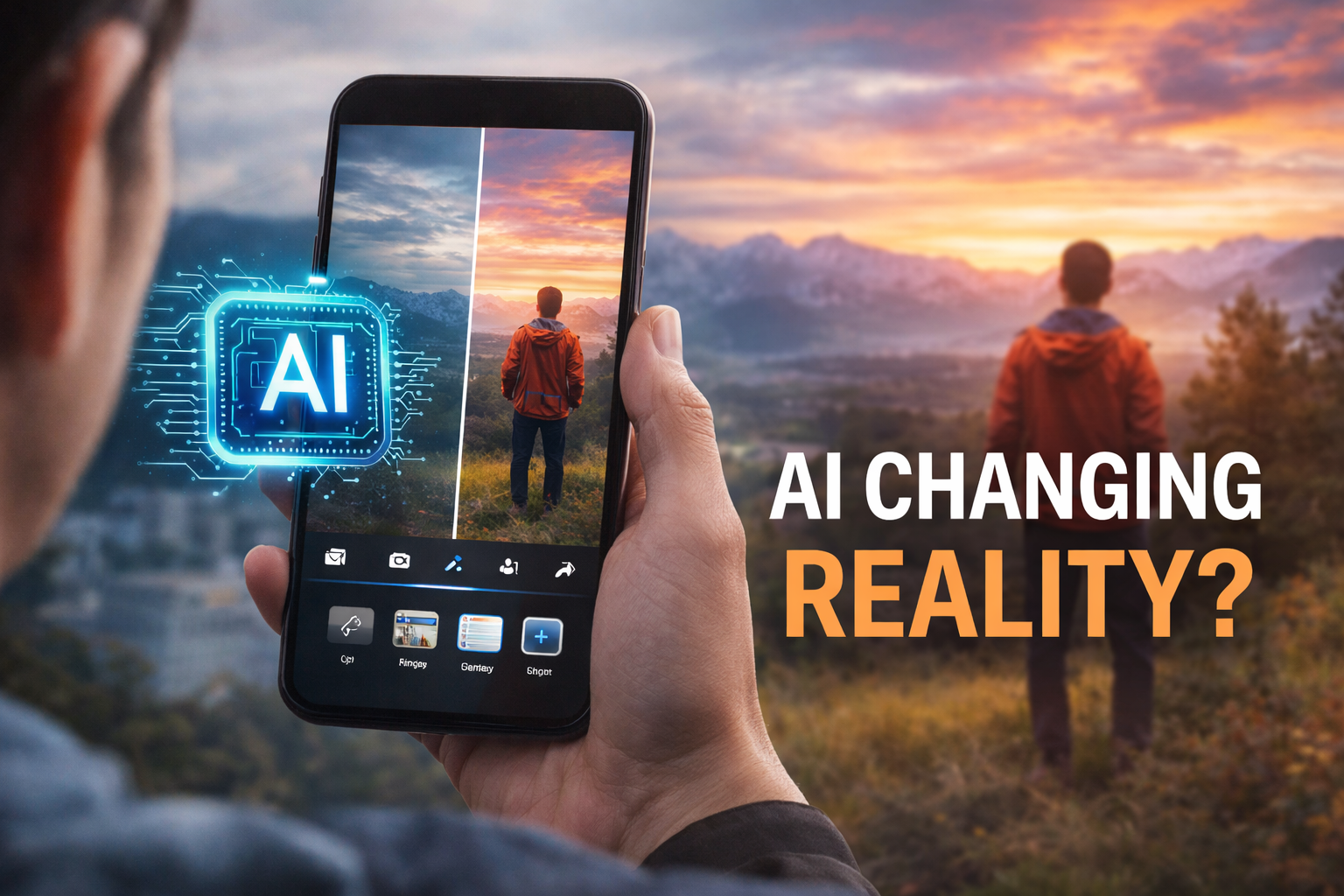
Today’s phones and apps are so advanced that many edits happen automatically or with just a few taps. AI tools can remove unwanted objects, adjust lighting, blur backgrounds, or even suggest stylistic changes based on what the user might like. In some systems, you can tell the phone what you want changed in natural language, and AI will make it happen without any technical photo-editing skills.
As a result, photographs that once served as straightforward records of moments are now more likely to be shaped — even unconsciously — by machine learning algorithms designed to “improve” them. For many people, the line between the original memory and the enhanced image is becoming blurred.
When Memory Meets Machine Editing
Recent academic research suggests that AI-edited photos can influence how people remember events. In controlled studies, participants who viewed AI-altered images were more likely to form confident memories about things that didn’t actually happen. This means that visual cues enhanced or changed by AI could create or strengthen false recollections over time.
Another research project explored the psychological side of using generative AI for photo editing and found that people often valued the “feeling” of a memory over factual accuracy. Even when AI edits took creative liberties, users’ emotional connections to those images sometimes strengthened, showing how edits can shape personal narratives.
Why This Matters
This trend raises important questions about how we use and trust images. Photographs have traditionally functioned as evidence — proof of a moment in time. But when AI subtly alters that image, even for aesthetic reasons, our brains may start to treat the edited version as the real memory.
The rise of photo-editing AI tools means that digital images may not just reflect reality — they could actively reshape it in people’s minds. When people see edited versions of personal moments repeatedly, those AI-enhanced visuals can feel as authentic as the actual event, even if they differ from what really happened.
The Upside of AI Editing
AI tools can certainly make photo editing easier, helping people fix common issues like bad lighting or distracting elements. For casual photographers and social media users, these tools improve the visual quality of photos and help preserve images in a more polished form without any expertise.
Some users enjoy extra features such as background changes or stylistic filters because they allow for creative expression that wasn’t possible with basic camera software in the past. In this way, AI can democratize editing and bring advanced capabilities to everyone — not just professionals.
The Risks: Reality, Trust, and Memory
The downside comes when edited images become accepted as a direct reflection of the past. When AI subtly adjusts photos — changing skies, reshaping faces, or inserting objects — our mental records of events may shift accordingly. Over time, these edited visuals could influence how we recall personal moments, relationships, and experiences.
Because AI editing tools are now built into everyday apps and often operate with minimal user awareness, people may not even realize how much their photos have been altered. That raises concerns about authenticity, memory distortion, and even broader cultural perceptions of truth in visual media.
What Users Can Do
To navigate this changing landscape responsibly, users can:
- Check original versions of photos before editing whenever possible.
- Be mindful of edits and question whether a polished image reflects reality.
- Understand tool limitations and avoid over-relying on AI enhancements for important or historical photos.
- Use content credentials or metadata markers when available to identify AI modification.
These steps help ensure that personal photo archives remain meaningful without unintentionally erasing or reshaping memories.
Final Thoughts
AI editing on phones is transforming how photos are captured, enhanced, and remembered. While the technology provides powerful creative and convenience advantages, it also introduces complex questions about how visual media influences our perception of reality.
As AI becomes more integrated into everyday digital experiences, understanding its impact — both positive and negative — will become increasingly important. In a world where your phone can subtly alter the way you remember your own life, knowing the difference between fact and AI-enhanced fiction matters more than ever.
FAQ
❓ Does my phone really edit photos automatically?
Yes, most modern smartphones use AI to enhance photos automatically, including lighting, color, and background adjustments.
❓ Can AI photo editing affect memory?
Studies suggest that viewing AI-edited images can influence how people remember events, sometimes creating false or altered memories.
❓ Are AI-edited photos less authentic?
AI-edited photos may look better visually but can reduce authenticity if changes alter the original scene or details.
Call-to-Action
Want to stay ahead of AI trends reshaping the creative world?
Follow TheFocusCraft.com for weekly deep dives on design innovation, creative tools, and tech-powered storytelling.