
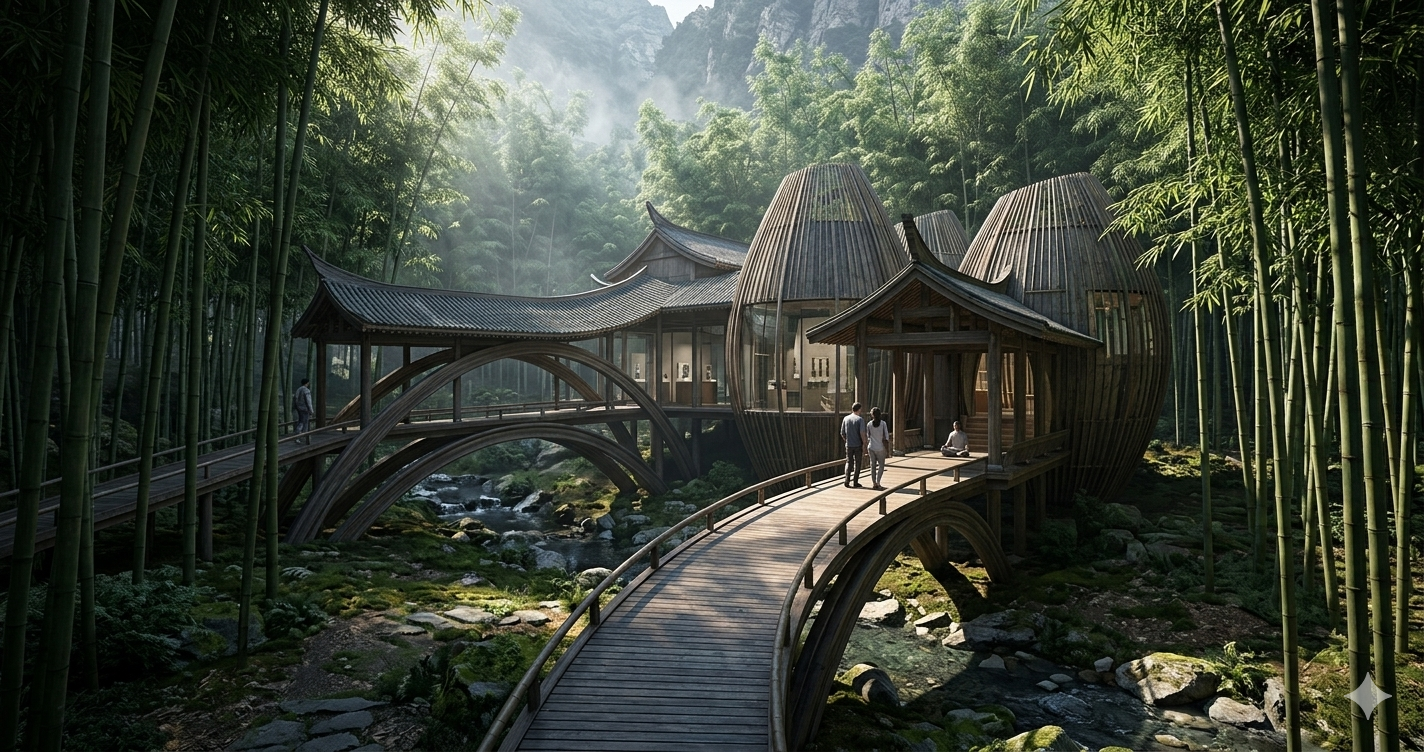
Vernacular Bridges Micro‑Museum in a Bamboo Grove, China
The Vernacular Bridges Micro‑Museum is a thoughtfully designed cultural space located beside a traditional stone bridge and a lush bamboo grove in Huizhou, China. It celebrates local bridge‑building heritage and craftsmanship, creating a quiet place for visitors to explore architectural history, craftsmanship, and the surrounding landscape.
This project blends regional tradition with contemporary design to honor the legacy of historic bridge structures while providing an accessible public space.
A Museum Rooted in Local Bridge History
The micro‑museum sits adjacent to an old stone bridge that has long been part of everyday life in the region. Local bridge traditions include unique structures once used to help villagers cross rivers and streams. These historic bridges were built using local materials and techniques that are now less common, but remain an important part of the area’s vernacular architecture.
The design team conducted extensive research into these traditional forms, studying how the bridges were built, the logic of their structures, and the cultural significance they held in daily life.
Design Concept and Composition
Rather than replicating historic bridges exactly, the micro‑museum reinterprets their structural logic in a modern way. The architectural forms are inspired by the interconnected piers and decks of traditional bridges, expressed as a series of elongated, spindle‑like volumes and elevated walkways.
These elements establish a visual dialogue with the natural surroundings — the river, the bamboo grove, and the existing historic bridge. The raised pathways allow visitors to experience panoramic views and create an architectural sequence that reflects the rhythm of historic bridge decks.
The design achieves a balance between a contemporary aesthetic and a cultural narrative, allowing the building to feel both rooted in place and clearly of its own time.
Cultural Narrative and Visitor Experience
Inside the micro‑museum, exhibitions focus on the forgotten craftsmanship and construction techniques associated with local bridge building. Displays include visual studies, prints, and models that help visitors understand the engineering logic and cultural context of these traditional structures.
The layout encourages reflection, with framed views of the historic bridge and bamboo grove integrated into the visitor experience. This creates a sense of continuity between the past and present, encouraging visitors to connect with the deeper history of the place.
Outdoor elevated walkways further enhance the experience by inviting visitors to walk above the landscape, echoing the spatial rhythm of traditional bridge decks and offering unique vantage points.
Architecture in Context
Situated in a scenic part of Huizhou, the micro‑museum stands as an example of how modern architecture can interpret regional vernacular traditions without copying them directly. It highlights the value of local craftsmanship and heritage while providing functional space for education and tourism.
The project also contributes to a broader movement in architecture that seeks to reconnect communities with their cultural and built heritage in meaningful and contemporary ways.
FAQs
1. What is the Vernacular Bridges Micro‑Museum?
It is a cultural and educational space that celebrates local bridge‑building traditions and craftsmanship in Huizhou, China. The design interprets traditional forms in a contemporary architectural language.
2. Where is the micro‑museum located?
The museum is situated beside an old stone bridge and a bamboo grove, integrated into the surrounding landscape to highlight local history and nature.
3. What does the design represent?
The architecture draws inspiration from the structural logic of historic bridges, using elevated walkways and spindle‑like forms to create a visual and spatial connection to the past.
4. What can visitors expect inside?
Exhibits focus on historical bridge construction techniques, visual studies, and contextual displays that explain local traditions and materials.
5. Why is this project significant?
The project demonstrates how contemporary architecture can honor vernacular traditions, preserving cultural memory while fostering modern visitor experiences.
6. Is the museum focused only on history?
While history and craftsmanship are central themes, the museum also serves as a space for reflection, connection with nature, and appreciation of local heritage in a modern architectural setting.