
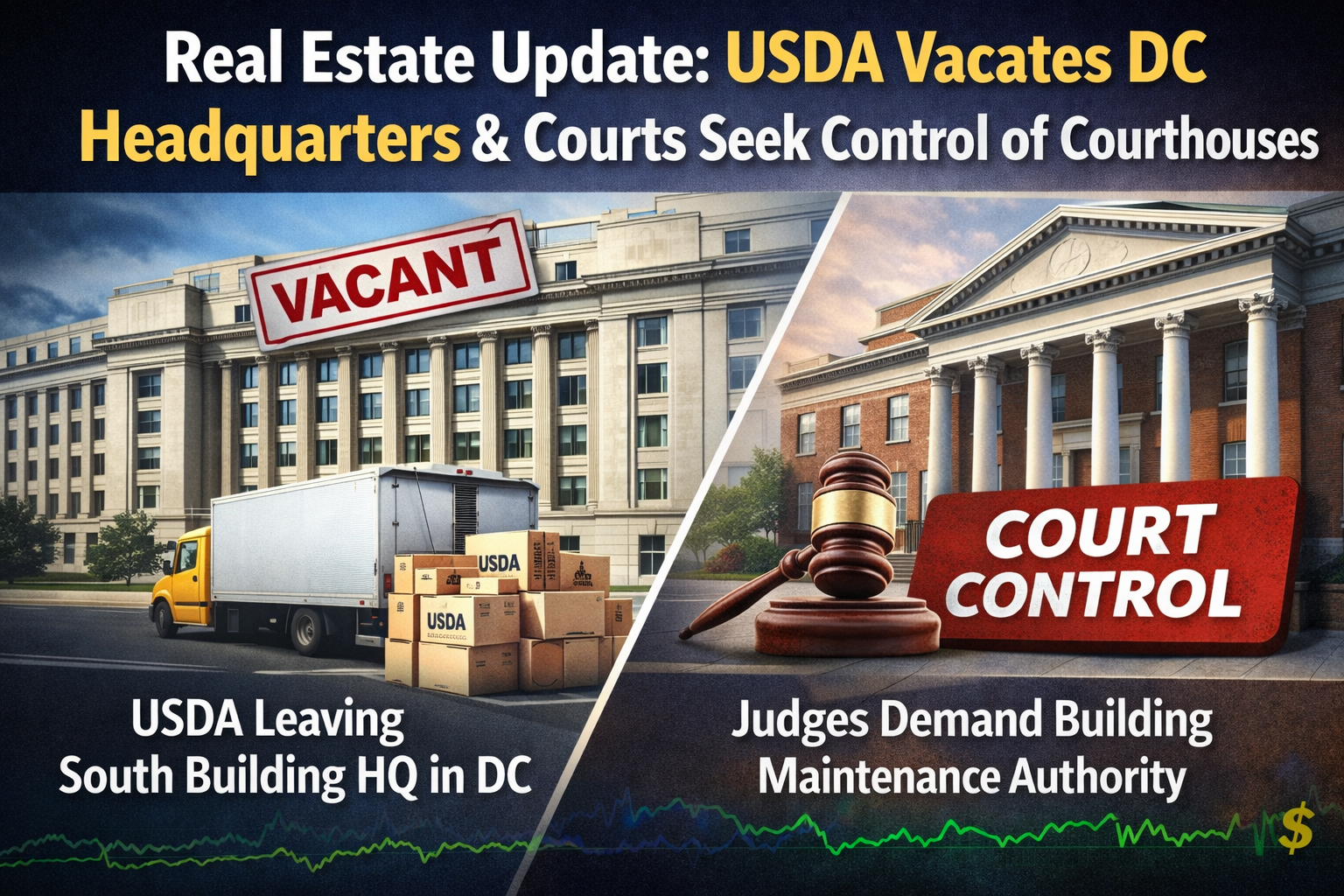
Real Estate Update: USDA to Vacate Part of DC Headquarters; Courts Seek Control of Courthouses
In a major development affecting federal property in Washington, D.C., the U.S. Department of Agriculture (USDA) has announced that it will vacate a significant portion of its headquarters building in the capital. At the same time, the federal judiciary is pushing for new authority to manage courthouse facilities directly, citing urgent repair needs and infrastructure concerns.
These moves reflect a broader shift in how federal real estate assets are managed, with an emphasis on cutting costs, improving efficiency, and reallocating resources more strategically.
USDA to Vacate Part of DC Headquarters
The USDA’s headquarters complex in Washington, D.C. includes multiple expansive office buildings. Over the past several years, occupancy levels in these facilities have fallen dramatically, with a large percentage of workspaces remaining empty for much of the week.
Faced with high ongoing maintenance costs and a building that is more expensive to operate than to utilize, USDA leadership decided to vacate a major portion of one of its central buildings in the city. The decision is part of a broader plan to relocate many of the agency’s employees to regional offices across the country.
By moving personnel out of underutilized space in Washington, USDA hopes to reduce overhead costs and bring staff closer to the communities and regions they serve. Regional hubs planned for USDA operations include locations in multiple states, providing better access to local stakeholders and improving work‑life balance for many employees.
USDA officials have emphasized that the transition will be carried out thoughtfully, with consideration for individual circumstances and family needs. The rollout of the hub model is expected to take place over several months, with many employees relocating in time for the next academic year for families with school‑aged children.
Courts Seek Control of Courthouse Infrastructure
While USDA reorganizes its property holdings, the federal judiciary is raising concerns about the condition of courthouses across the nation. Many federal courthouses, some of which date back decades, face a growing backlog of infrastructure needs.
Judicial leaders have argued that the current system for maintaining and upgrading courthouse facilities is inefficient and underfunded. Under the existing federal property management framework, court buildings are managed by a central civilian agency, which must balance maintenance needs across thousands of federal buildings.
The judiciary is now seeking increased authority to oversee the repair and maintenance of its own facilities. The argument is that courts are best positioned to understand their own space requirements, security needs, and critical operational functions — and therefore should have greater control over decisions affecting courthouse conditions.
Judicial officials point to aging electrical and mechanical systems, inadequate security infrastructure, and deferred repairs as evidence that the current system does not adequately support the growing demands placed on federal courthouses. Advocates for increased judicial control argue that granting this authority will improve responsiveness, accountability, and overall building performance.
What This Means for Federal Real Estate Policy
These two developments highlight a shifting paradigm in federal real estate management:
- Agencies are reevaluating underused assets and seeking to reduce expensive footprints in high‑cost urban centers.
- New operational models, such as regional hubs, aim to bring agencies closer to the public and reduce legacy costs.
- Branches of government with unique operational needs, like the judiciary, are pushing for tailored authority over their physical infrastructure.
- Cost pressures, deferred maintenance, and changing work patterns continue to drive decision‑making across federal property portfolios.
Taken together, USDA’s relocation plans and the judiciary’s push for courthouse control reflect ongoing federal efforts to modernize how government space is used and maintained.
Frequently Asked Questions (FAQs)
1. Why is the USDA vacating part of its Washington, D.C. headquarters?
USDA is vacating a portion of its headquarters because occupancy has fallen sharply and the cost of maintaining the space far exceeds its current use. Moving employees to regional offices will cut costs and improve access to local stakeholders.
2. Where will USDA employees work after the relocation?
USDA plans to move many staff members to regional hub offices in several states. These hubs are intended to house core operations and improve service delivery across the country.
3. What problems are federal courthouses facing?
Federal courthouses are dealing with aging infrastructure, deferred repairs, and security concerns. Judicial officials believe the current system for maintaining these buildings is not working effectively.
4. Why do courts want more control over their buildings?
Courts argue that they are best positioned to manage their facilities because they understand their operational needs and security requirements. Greater control over building maintenance could improve responsiveness and accountability.
5. Will these changes affect taxpayers?
Potentially, yes. By reducing underused space and improving building efficiency, federal agencies hope to lower long‑term property costs. However, the shift in control of courthouses and renovation responsibilities could require new funding frameworks or legislative changes.
6. What is the broader significance of these federal real estate changes?
These developments reflect broader trends in government operations: reevaluating legacy buildings, reducing unnecessary costs, and adapting property portfolios to modern work patterns and service needs.