

Have you ever looked at someone’s photo and thought, “Wow… how did they make that look so good?” Maybe it was the lighting, the colors, or just the feeling it gave you, something about it felt magical. And then you look at your camera roll and think… meh.
I’ve been there.
When I first got into photography, I thought I needed fancy gear or years of experience to take eye-catching photos. However, as I began learning, I realized something surprising: many of those “wow” shots result from simple Photography Tricks – little things that make a huge difference once you know them.
So in this post, I want to share 5 creative photography hacks that helped me go from “meh” to “whoa, you took that?!” These aren’t technical or overwhelming; they’re the kind of tips anyone can try, even if you’re just using your phone. Whether you’re just getting started or want to breathe new life into your photos, these hacks might be the spark you’ve been looking for.
Ready? Let’s jump in.
Mastering Natural Light for Stunning Shots

Using natural light in your photography can make a huge difference and the best part? You don’t need any fancy equipment to get started. Just a little know-how and a bit of practice, and you’ll start seeing your photos go from “okay” to “wow” in no time.
Here’s how to make the most of natural light in a way that’s simple and fun:
Make friends with the golden hour
- The golden hour is that short window right after sunrise or just before sunset when the sunlight is soft, golden, and super flattering.
- Photos taken during this time often look warm and dreamy.
- Great for portraits, nature shots, or anything you want to look peaceful and beautiful.
Don’t be afraid of cloudy days
- A lot of people think you need bright sunshine for great photos but that’s not true at all.
- On cloudy or overcast days, the light is softer and more even, which means:
- No harsh shadows.
- No one is squinting in the sun.
- More detail in faces, clothes, and backgrounds.
- No harsh shadows.
Use what’s around you
- Light bounces off things like water, sand, white walls, or even light clothing.
- This reflected light can help brighten your subject naturally.
- It’s like having a built-in, free reflector!
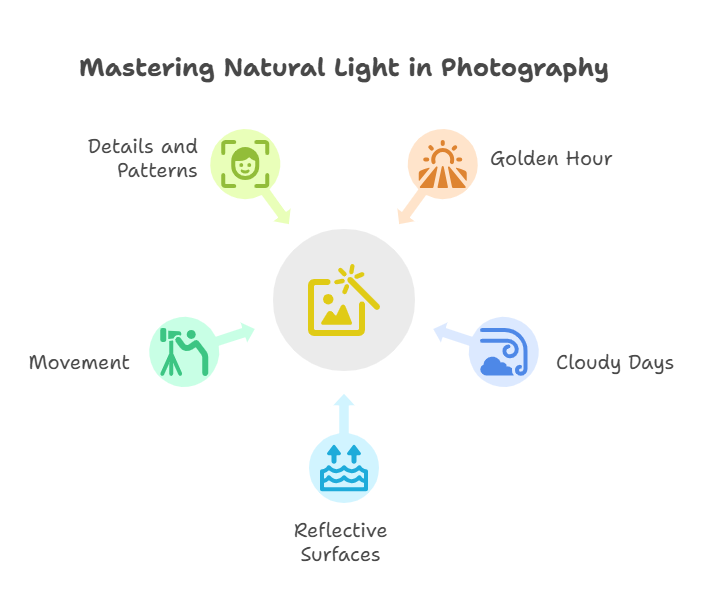
Move around a little
- Don’t just stay in one spot; take a few steps left, right, or even crouch down.
- Changing your angle can change how the light hits your subject.
- Try:
- Light coming from the front for clear, bright shots.
- Light from the side for cool shadows and depth.
- Light behind your subject for a soft, glowing effect.
- Light coming from the front for clear, bright shots.
Look for details and patterns
- Light creates amazing patterns and textures on faces, in nature, through windows, or on trees.
- Pay attention to shadows, highlights, and how light changes depending on your location.
- These little details can make your photos stand out.
Let light be your creative partner
Natural light isn’t just something you “use.” It’s part of your photo. When you start seeing light as a creative friend, not just something you need to work around, you’ll find yourself taking more thoughtful, beautiful pictures.
And the best part? It’s free, always changing, and all around you. Just open your eyes and start experimenting!
Utilizing Composition Techniques for Impactful Images
Taking great photos isn’t just about having a good camera it’s also about how you frame what you see. A few simple composition techniques can completely change the way your photos look and feel, even if you’re just starting.
One fun and powerful technique is using something called “leading lines.” It might sound technical, but it’s just about paying attention to things like roads, fences, paths, or even the edge of a building, anything that naturally guides the viewer’s eyes into the photo. These lines can lead to your subject, or just create a sense of movement and depth that makes your image more interesting. Think of a curving road that draws your eye toward the horizon, or a shadow that cuts across a wall and adds a bit of mystery. These simple details can make your photos feel like they have a story to tell.
Another classic technique that’s easy to try is the rule of thirds. This idea comes from imagining your frame divided into nine equal boxes, like a big tic-tac-toe grid. Instead of placing your subject right in the middle, you try positioning it a little off-center, along one of the lines or where the lines cross. This creates a more natural, balanced look that draws people in. But here’s the thing it’s not a rule you have to follow all the time. Breaking it on purpose can lead to some really bold, creative shots. Sometimes, putting your subject dead center or way off to the side makes the image feel more dramatic or unique.
At the end of the day, good composition is about more than just rules or technique. It’s about feeling. It’s about how the photo makes someone react when they see it. A well-composed photo can make someone pause, wonder, smile, or even feel something deep. That’s the real power of photography not just capturing what you see, but sharing how you see it.
So next time you’re out taking photos, try looking at the world a little differently. Follow a line with your eyes, move your camera just a bit to one side, or frame your shot in a way that tells a story. With a little practice, you’ll start to notice that your photos don’t just look better, they start to come alive.
The Power of Perspective in Photography
Perspective in photography is not merely a technical consideration; it’s a transformative tool that can alter the narrative of an image. By experimenting with angles, distances, and vantage points, photographers can evoke different emotions and convey distinct messages. For instance, shooting from a low angle can instill a sense of grandeur and power, while a high angle may impart vulnerability or insignificance. This manipulation of viewpoint becomes one of the most effective photography tricks, allowing artists to challenge viewers’ perceptions and engage them in a deeper dialogue with the subject.
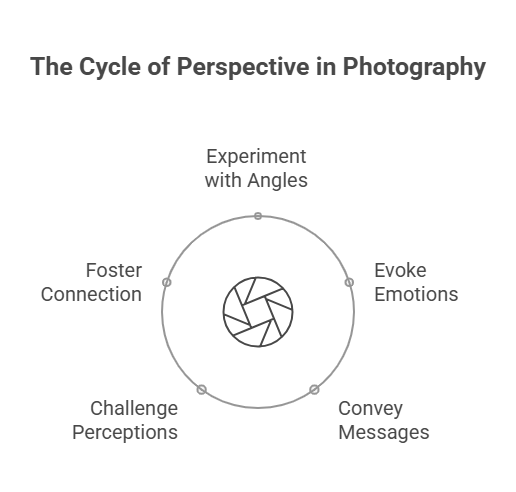
Moreover, the choice of perspective extends beyond physical positioning; it also encompasses the emotional lens through which a scene is viewed. By focusing on the details that might otherwise go unnoticed, like the intricate patterns of shadows or the fleeting expressions of passersby, photographers can invite audiences to see the world through their eyes. This nuanced approach fosters a connection that transcends the visual, encouraging viewers to reflect on their interpretations and feelings about the captured moment. Ultimately, mastering perspective is key to elevating one’s photographic practice, transforming ordinary scenes into extraordinary narratives.
Creative Use of Color and Contrast
Harnessing the power of color and contrast in photography can transform a mundane image into a captivating visual narrative. By deliberately selecting color palettes that evoke specific emotions, photographers can create a deeper connection with their audience. For instance, warm tones like reds and oranges can evoke feelings of warmth and comfort, while cooler hues may impart tranquility or melancholy. Understanding the psychological impact of colors allows photographers to make intentional choices that resonate on an emotional level.
Contrast plays a crucial role in drawi
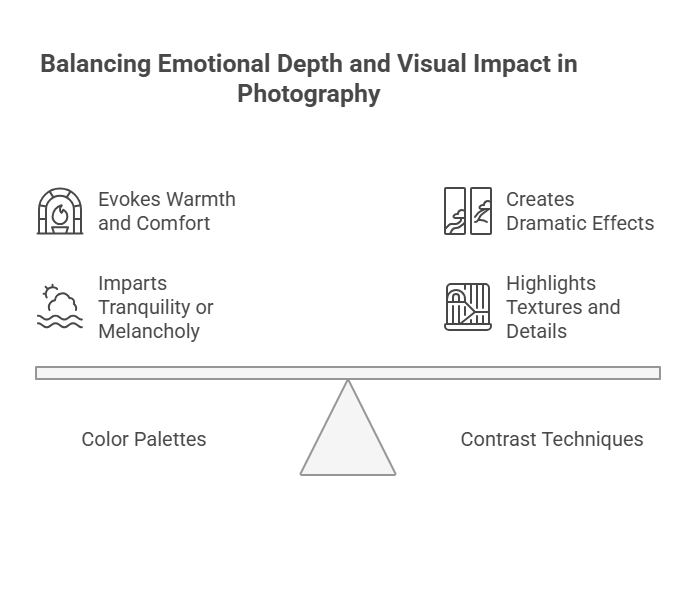
ng attention to key elements within a composition. Utilizing high contrast between light and shadow can create dramatic effects that enhance the mood of a photograph. Techniques such as backlighting or using reflectors to manipulate natural light can yield striking images that highlight textures and details. Moreover, incorporating complementary colors, those opposite each other on the color wheel, can create a dynamic tension that captivates the viewer’s eye. By experimenting with these photography tricks, artists can elevate their work, transforming simple scenes into powerful stories through the eloquence of color and contrast.
Tips for Capturing Dynamic Movement
Capturing movement in a photo can be one of the most exciting and rewarding parts of photography. It’s about freezing a split second in time or showing the rush and rhythm of what’s happening around you. To do it well, you need a mix of awareness, timing, and just a little technical know-how but don’t worry, it’s easier than it sounds.
One of the first things to play with is your shutter speed. This is basically how long your camera’s eye stays open. If you want to freeze action like someone jumping, a bird taking flight, or a soccer player mid-kick, a fast shutter speed is your best friend. It captures the moment crisply, without any blur.
On the other hand, if you want to show movement, like the flowing motion of a dancer or the rush of cars at night, try slowing that shutter speed down a bit. This adds a soft blur that brings energy and life into your photo, making viewers feel like they’re right there in the middle of the action.
Another cool trick to try is panning. It might take a little practice, but it’s worth it. Just follow your moving subject with the camera while using a slower shutter speed. What you get is a sharp subject with a beautifully blurred background, which gives a sense of speed and motion, almost like the subject is bursting out of the frame.
Lighting also makes a big difference. Shooting during golden hour, those warm, soft-light moments right after sunrise or before sunset, can add an extra layer of magic to your action shots. And if you’re working in lower light, don’t be afraid of shadows. They can add drama and help highlight the shape and direction of movement strikingly.
If you want to make sure you don’t miss that perfect moment, try using burst mode. That’s when your camera or phone takes several photos quickly, so you can pick the one where everything came together just right, the leap, the twist, the splash.
Most importantly, be ready and be observant. Pay attention to your subject, whether it’s a dancer, an athlete, a pet, or even waves crashing on a shore. Try to predict what’s going to happen next and position yourself where you’ll have the best view. Often, it’s about patience and being in the right place at the right time.
In the end, capturing motion is less about gear and more about feeling the rhythm of the scene. When you combine technique with instinct, your photos won’t just show what happened, they’ll make people feel it too.
Editing Essentials to Enhance Your Photos

Editing your photos can transform an ordinary image into a stunning visual masterpiece, and mastering a few essential techniques can elevate your photography game. One of the most effective photography tricks is adjusting the exposure and contrast. By fine-tuning these elements, you can breathe life into your images, bringing out details in shadows and highlights that might otherwise go unnoticed. Subtle adjustments can create depth and dimension, making your subject stand out in a crowded frame.
Color correction is another critical aspect of photo editing that often goes overlooked. Utilizing tools to enhance vibrancy and saturation can evoke emotions and set the tone for your photographs. Experimenting with color grading not only allows you to establish a unique style but also helps convey a specific narrative or mood. Additionally, consider using cropping strategically to improve composition; this simple yet powerful technique can draw the viewer’s eye to the focal point, eliminating distractions and enhancing the overall impact of the image. Embrace these editing essentials, and watch your photographs transform into captivating stories.
Elevate Your Photography Skills Today
If you really want to take your photography to the next level, try thinking of each photo as a story. A good picture doesn’t just show what something looks like it makes people feel something. It pulls them in. It makes them wonder what happened before the moment, or what might happen next. That’s the magic of storytelling through photography.
To do this, start by experimenting a bit more with how you take your shots. Try different angles, get low to the ground, shoot from above, or move to the side. See how it changes the mood of the image. Play around with how you frame your subject. Leave space around it, or get in close. And notice how light changes everything. Shooting during golden hour, that beautiful time just after sunrise or before sunset, can give your photos a warm, golden glow that adds emotion and depth. On the flip side, shadows can make a scene feel mysterious or dramatic, depending on how you use them.
Once you’ve captured your shot, don’t forget about the editing process. A little post-processing can go a long way in bringing out the best in your photos. If you’re just getting started, tools like Adobe Lightroom or even your phone’s editing app can help you make simple tweaks. You can adjust the brightness, contrast, or colors to match the mood you were going for when you took the photo. Even small changes, like sharpening the focus or adding a little warmth, can make an image pop.
And yes, presets and filters can be fun and useful too. They’re great for saving time or creating a consistent look, especially on social media. But try not to rely on them too much. The best edits are the ones that still feel like you. Keep your unique style in mind, and let your editing enhance the story you’re trying to tell, not cover it up.
At the end of the day, photography isn’t just about capturing what you see it’s about sharing how you see the world. The more you practice telling stories through your photos, the more powerful and personal your work will become. And that’s where the real magic happens.
Conclusion
In the realm of photography, the journey often proves to be as significant as the final image itself. Each click of the shutter encapsulates not only a moment but also the myriad techniques and photography tricks that bring a unique vision to life. Embracing experimentation can transform the mundane into the extraordinary; simple adjustments in composition, lighting, or perspective can yield stunning results that resonate with viewers on a deeper level.
Moreover, as technology continues to evolve, so too does the art of photography. Emerging tools and software open up new avenues for creativity, allowing photographers to manipulate images in ways previously unimaginable. However, it is essential to remember that the heart of impactful photography lies not solely in technical prowess but in the ability to convey emotion and story. By blending innovative photography tricks with authentic narratives, photographers can engage audiences, inspiring them to see the world through a fresh lens and igniting a desire for exploration and connection.