
Northern Lights Appear Across Parts of the U.S. as Geomagnetic Storm Lights Sky
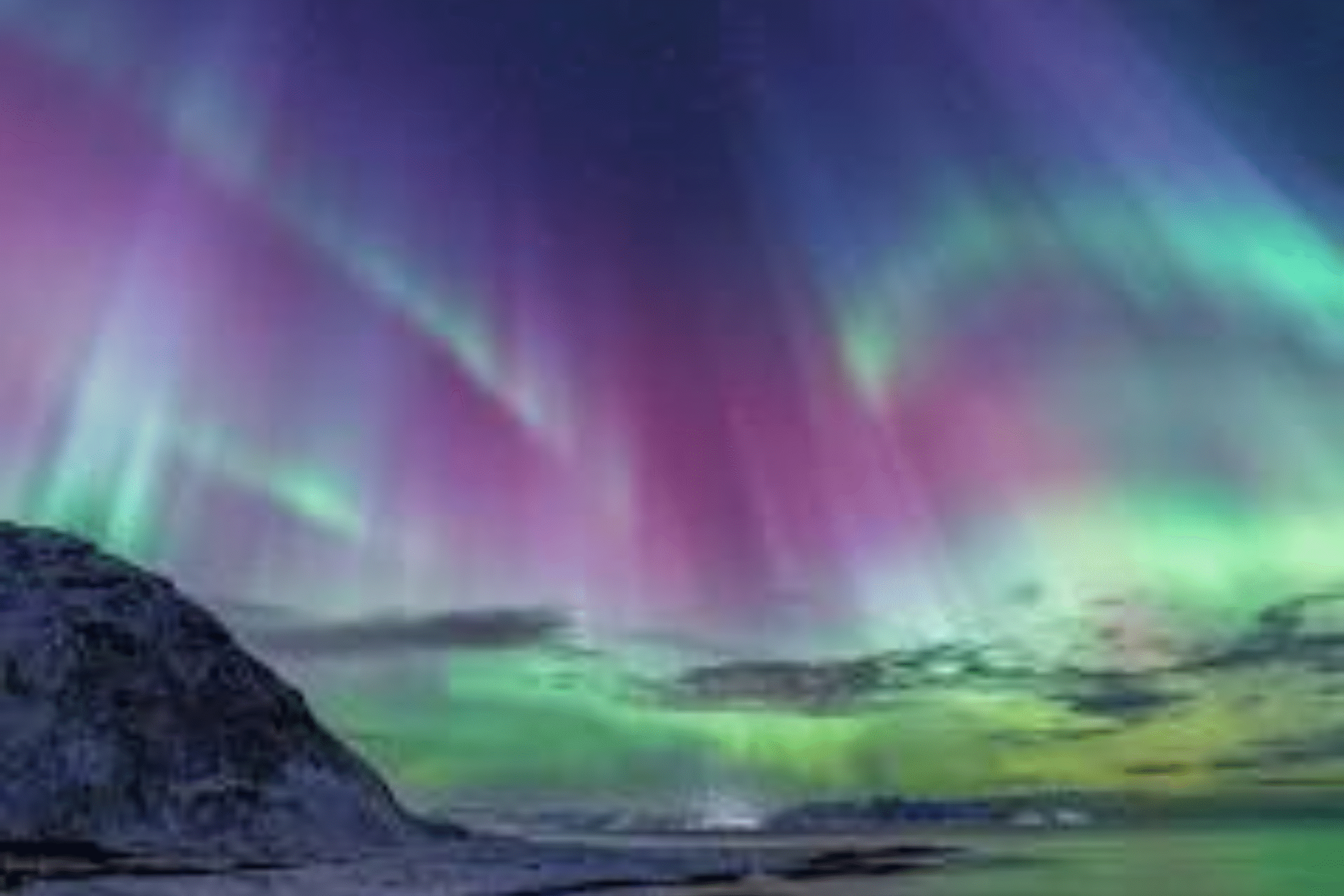
Communities across North America observed bright and colorful atmospheric displays as the Northern Lights (aurora borealis) became visible in regions far south of their usual range. Residents in states including Michigan, Oregon, and California shared images and videos online showing the sky glowing with ribbons of green and red. This stunning spectacle resulted from elevated space weather activity driven by solar storm events and geomagnetic storms reaching Earth’s magnetic field.
Scientists confirmed that recent increases in solar wind speed and particles striking Earth’s magnetosphere triggered heightened aurora borealis tonight activity. Observers in the northern tier of the United States saw the lights well into the late hours, while more southerly regions experienced intermittent sightings. The activity also included flashes in states like Colorado and Massachusetts, where reports of northern lights Colorado and northern lights Massachusetts surfaced on social platforms.
In general, this was not a single isolated show. Weather and space monitoring agencies such as NOAA weather and independent aurora forecasters tracked elevated solar activity that created conditions favorable for aurora displays. These agencies reported a geomagnetic storm today, rating it at levels that produced widespread visibility deeper into mid-latitudes than usual.
What Caused the Aurora Borealis Displays
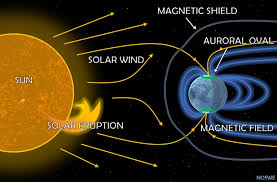
Scientists explain that the Northern Lights result when charged particles from the Sun interact with Earth’s magnetic field and atmosphere. A surge in this activity often links to disturbances on the Sun, including solar flares 2026 and coronal mass ejections that send billions of electrically charged particles outward. When these streams of particles hit Earth’s magnetic field with force, they can trigger a geomagnetic storm.
Aurora experts classify geomagnetic storms on a scale from G1 (minor) to G5 (extreme). Recent activity reached levels consistent with a G3 or higher, producing visible lights at latitudes where people do not typically see them. A G4 geomagnetic storm could generate vivid aurora across wide areas, including states on the southern fringe of typical aurora zones.
NOAA’s northern lights aurora forecast charts use measurements of solar wind, magnetic field orientation, and particle density to estimate activity. These forecasts showed increased probabilities of visible aurora across large swaths of the northern United States during late evening and nighttime hours.
Reports From the Field
In Michigan, photographers lined shorelines along lakes and open parks to capture the lights dancing overhead. The northern lights Michigan sightings included broad arches of neon green mixed with rare highlights of red and purple hues that arched from horizon to horizon. Many viewers reported that the lights appeared stronger than past years, with some photos showing dramatic waves of aurora that looked almost like cosmic curtains.
Social posts from Oregon reflected similar excitement. People in the Pacific Northwest reported glimpses of the lights, in both urban areas like Portland and rural places away from light pollution. Posts tagged northern lights Oregon and aurora borealis Oregon drew large engagement from social media audiences, especially from viewers who rarely get a chance to see the phenomenon in that region.
California residents also reported occasional flashes against night skies, particularly in higher elevations and darker rural zones. Users searching northern lights California posted compelling visuals from locations such as the Sierra Nevada, where the glow of the aurora stood out against star fields.
In Utah, observers in wide open spaces saw glowing arcs near midnight, sparking reports under northern lights Utah. Even closer to the East Coast, in places like New Jersey, amateur astronomers caught glimpses of faint aurora activity, leading to snapshots under northern lights New Jersey.
From Seattle and across Washington state, uncommonly strong aurora displays brought excited chatter from local photographers. Many described the experience as surreal, capturing streaks overhead with long-exposure photography. Posts tagged aurora borealis Seattle and northern lights Seattle showed layered papers of light that stretched across the sky.
Forecasting and Space Weather Monitoring
Multiple monitoring platforms and international space weather services worked through the period to update forecasts. NOAA’s aurora forecast tonight page supplied real-time data on geomagnetic conditions. Ground observers confirmed those predictions, with aurora reports from north of the U.S.–Canada border reaching deep into night hours and carrying into the early morning.
The current activity stems from a series of solar eruptions that pushed solar wind particles toward Earth. When these particles encountered Earth’s magnetosphere, they transferred energy into the upper atmosphere. That energy excited oxygen and nitrogen molecules, causing them to emit the brilliant lights known as the northern lights aurora borealis.
Astronomers emphasize that such displays vary in intensity and timing. A forecast that shows a “green zone” means higher chances of widespread visibility. Meteorologists in space weather refer to contours of potential visibility called aurora forecast tonight maps. These charts help photographers and skywatchers decide the best times to look up.
Reports from observatories indicated that activity extended beyond one night, with periods of excitement expected to continue as multiple disturbances on the Sun’s surface push outward. Monitoring agencies continue to chart the influence of solar storms and how they affect Earth’s magnetic environment.
- Man Charged After Cyclist Pushed Off Beach Seawall in Sandown

- Dan N Rose Photography & Film | Professional Photography & Film Services in Katy, Texas

- Real Estate Update: USDA Vacates DC Headquarters & Courts Seek Control of Courthouses

- Rewarx Launches Prompt-Free AI for 4K E-Commerce Photos

- Middle East War Explained: Maps, Videos and Photos

- Cognizant Classic 2026: How to Watch Round 2, Live Scores, Tee Times & Featured Groups

What Time Will the Northern Lights Be Visible Tonight?
Observers and forecasting sites often get the most accurate visibility windows just a few hours prior to peak activity. For the recent displays, the strongest aurora occurred late in the evening through midnight, when darkness provides the best backdrop for light visibility. Many weather apps and aurora trackers answered viewer queries such as “what time will the northern lights be visible tonight” with estimates focused around 10:00 p.m. to 2:00 a.m. local time, depending on location and geomagnetic conditions.
In places closer to typical aurora zones, like northern Michigan or parts of Minnesota and Wisconsin, the aurora remained visible later into nighttime. In regions farther south, occasional bursts showed up but tended to fade earlier. Space weather experts note that visibility also depends on local weather conditions, low light pollution, and sky clarity.
The Science and Its Broader Impacts
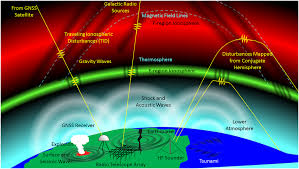
Geomagnetic storms not only produce dazzling aurora but can also affect technological systems. High levels of magnetic disturbance can influence satellite operations, GPS signals, high-frequency radio communication, and power grid behavior in extreme cases. Even though the recent activity mainly delighted sky watchers with aurora displays, utility operators and aviation industries keep an eye on space weather alerts to ensure equipment and navigation systems run smoothly.
NOAA and other agencies use data from solar observatories, satellites, and ground-based magnetometers to observe solar wind behavior. This data feeds into models that help predict how severe geomagnetic storms might become. When solar wind speeds climb above certain thresholds, meteorologists assign warnings that encourage preparedness among industries that rely on stable space weather conditions.
Public interest in these events grows each time widespread aurora becomes visible, especially farther from the poles than normal. Many people remain unaware of the links between solar activity, geomagnetic storms, and Earth’s upper atmosphere until a compelling display unfolds.
Looking Ahead
Aurora watchers now watch space weather predictions closely, especially as the Sun moves toward more active phases in its solar cycle. Solar activity rises and falls over an approximately 11-year cycle, and scientists expect more frequent and stronger bursts of activity as the peak approaches.
Platforms providing northern lights aurora borealis forecast data encourage observers to watch for updates as new solar events emit streams of charged particles. Local forecasting tools mesh solar data with geomagnetic indices to estimate both the timing and latitude ranges where the aurora might appear.
In many regions, community groups and astronomy clubs organize skywatch events when forecasts indicate strong activity. These gatherings bring amateur photographers and scientists together under night skies full of shimmering lights. Such events give everyday observers a chance to learn about space weather, the Sun’s influence on Earth, and the science behind phenomena like the aurora borealis tonight.
Conclusion
The recent stretch of aurora activity reminds us that our planet operates within a broader cosmic environment. Solar storms and geomagnetic storms send waves of particles to interact with Earth’s magnetic field, and sometimes those interactions produce breathtaking displays. This time, observers from Michigan to California and from Seattle to New Jersey got an unexpected show.
Scientists and sky watchers agree that these displays highlight both the beauty and power of natural forces. For many, witnessing the northern lights aurora borealis forecast unfold validated months of anticipation. Others, experiencing their first glimpses of the lights, shared awe and wonder at the spectacle.
As space weather models evolve and solar observatories continue tracking the Sun’s behavior, forecast platforms will keep refining predictions about future aurora borealis visibility. For now, the glowing bands of color stretching across night skies deliver a moment of connection between our world and the vast forces of the cosmos.
Turn Moments Into Powerful Visual Stories With TheFocusCraft
TheFocusCraft delivers professional photography services designed to elevate brands, properties, and personal milestones with clarity and authenticity.
Our Core Services:
- Real Estate Photography
High-impact property visuals that highlight space, lighting, and details to attract buyers and renters faster.
- Wedding Photography
Emotion-driven wedding photography that captures real moments, genuine expressions, and timeless memories.
- Product Photography
Clean, high-quality product images crafted for e-commerce, branding, and marketing that build trust and drive conversions.
Every shoot focuses on precision, storytelling, and visual credibility.
Explore Professional Photography Services at TheFocusCraft.com