
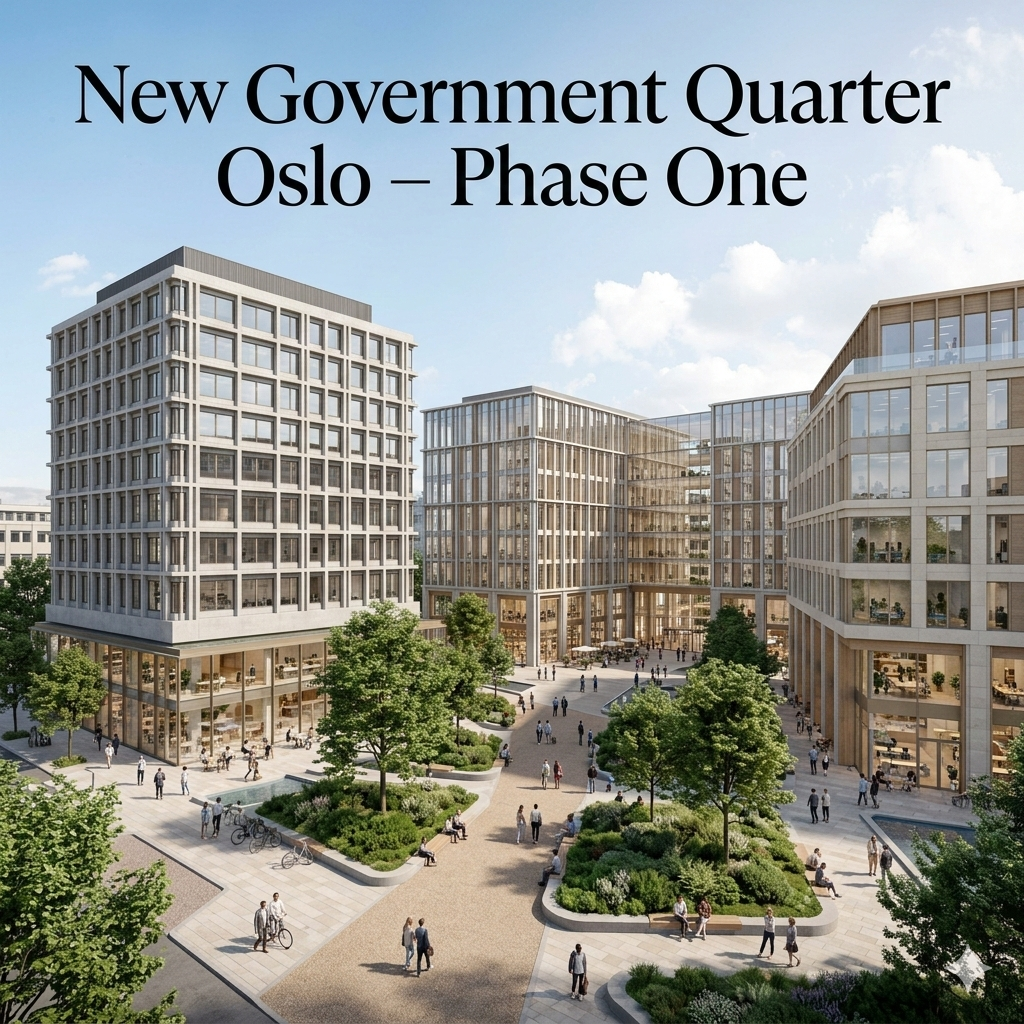
Nordic Office of Architecture and Haptic Architects Complete Phase One of Oslo’s New Government Quarter
In Oslo, Norway’s capital, a major transformation is taking shape: the first phase of the New Government Quarter has been completed. Designed by Nordic Office of Architecture in collaboration with Haptic Architects and other design partners, this project reconceives a significant civic district into a coherent, open, and human‑centered government campus.
The site is historically and emotionally significant — it was the location of a deadly attack in 2011. The new design responds to that history by creating spaces that are secure yet welcoming, functional yet connected to everyday city life.
A Civic Campus for People and Government
The master plan brings together government ministries and administrative offices into a compact, interconnected campus. The goal is to unify operations while opening up space for public use. Rather than isolating government functions, the design encourages interaction between the institution and the public.
Phase One includes:
- Restoration of the historic Høyblokka building, one of the only government buildings to survive the attack
- New government buildings placed around public plazas
- Open pedestrian paths and plazas linking to surrounding streets
The overall layout reintroduces public access into an area that had previously been cut off from everyday urban life. This shift emphasizes transparency and democratic engagement.
Architecture That Symbolizes Openness and Memory
A centerpiece of the new quarter is the A‑block building with its Pyramid Hall — a large, light‑filled atrium that serves as both a functional lobby and symbolic heart of the campus. The internal spaces are designed to feel accessible to the public, with generous glazing and open circulation.
Art and cultural elements play a key role in the experience. Indigenous cultural motifs and artworks are incorporated throughout the site, reflecting Norway’s heritage and inviting reflection on both past and future.
The architecture blends new structures with heritage elements, balancing modern design with respect for historic context.
Reconnecting with the Urban Fabric
One of the primary missions of the project has been to reconnect this district with Oslo’s street life. Previous infrastructure had isolated the government quarter behind barriers and roadways. The new design removes physical and psychological obstacles, replacing them with pedestrian passages, public plazas, and landscaped zones that invite city residents in.
Future phases will introduce a large public park and expanded civic spaces that further knit the quarter into everyday life for residents and visitors alike.
Security and Sustainability Integrated Seamlessly
Because the site must meet strict security requirements, designers faced the challenge of integrating protective measures without creating fortress‑like environments. Security features such as controlled access points and thoughtful landscape engineering are hidden within the architecture so they do not disrupt the human experience of the space.
Sustainability is also a core component. Local materials, durable finishes, and energy‑efficient systems support long‑term environmental goals. Wood and stone give warmth to interior spaces, while advanced heating and cooling systems reduce carbon use.
Existing furniture and fixtures from older government buildings have been reused where possible, connecting continuity with sustainability.
Commemorating History Without Isolation
The design honors the memory of the tragic events that occurred on this site without isolating that memory from everyday life. Historic artworks and commemorative pieces are woven into the new environment, creating moments of reflection that coexist with vibrant civic activity.
Instead of separating remembrance from function, memory becomes part of the daily experience of the space. This approach ensures that the history remains present and respected.
Looking Ahead: Phase Two and Beyond
Phase One represents a major milestone, but the transformation of the New Government Quarter continues. Future phases of construction will expand public amenities, add green space, and complete the overall master plan — with full project completion anticipated by the end of the decade.
This evolving campus will shape Oslo’s civic identity for generations, offering a renewed sense of openness, engagement, and democratic presence at the heart of the city.
FAQ – New Government Quarter Oslo
Q: What is Phase One of Oslo’s New Government Quarter?
Phase One includes restored and new government buildings, public plazas, and pathways that connect the district to the city and make it accessible and inviting.
Q: Which architects designed the project?
The project was designed by Nordic Office of Architecture in collaboration with Haptic Architects and allied design partners.
Q: What makes this government quarter significant?
This quarter transforms a historically significant site into an open public space that balances security, sustainability, and democratic access.
Q: How does the architecture handle security and openness?
Security is integrated through thoughtful site design and landscape, allowing public access without compromising protection.
Q: Is the project finished?
Phase One is complete, and future phases will expand the public park and continue development of the wider campus.