Mirrorless vs DSLR: Which Camera Is Better in 2026?
Photography has changed rapidly over the past decade. The debate around mirrorless vs DSLR cameras continues to shape the way photographers choose their equipment. Some professionals remain loyal to DSLR systems because of their reliability. Others have moved toward mirrorless bodies because of speed, compact design, and evolving technology.
In 2026, camera technology is more advanced than ever. Manufacturers have invested heavily in autofocus systems, sensor performance, artificial intelligence, and video features. Anyone planning to invest in a camera this year wants to know which option delivers the best value.
This guide explains the real differences between DSLR and mirrorless cameras so photographers can choose the right system for their work, style, and long-term goals.
Understanding DSLR Cameras
A DSLR camera uses a mirror mechanism inside the body. Light enters through the lens, reflects off a mirror, and reaches the optical viewfinder. When the shutter button is pressed, the mirror flips upward and the sensor captures the image.
For many years, DSLR cameras dominated professional photography because they offered:
- Strong battery performance
- Durable body construction
- Fast response time
- Wide lens availability
- Accurate optical viewfinders
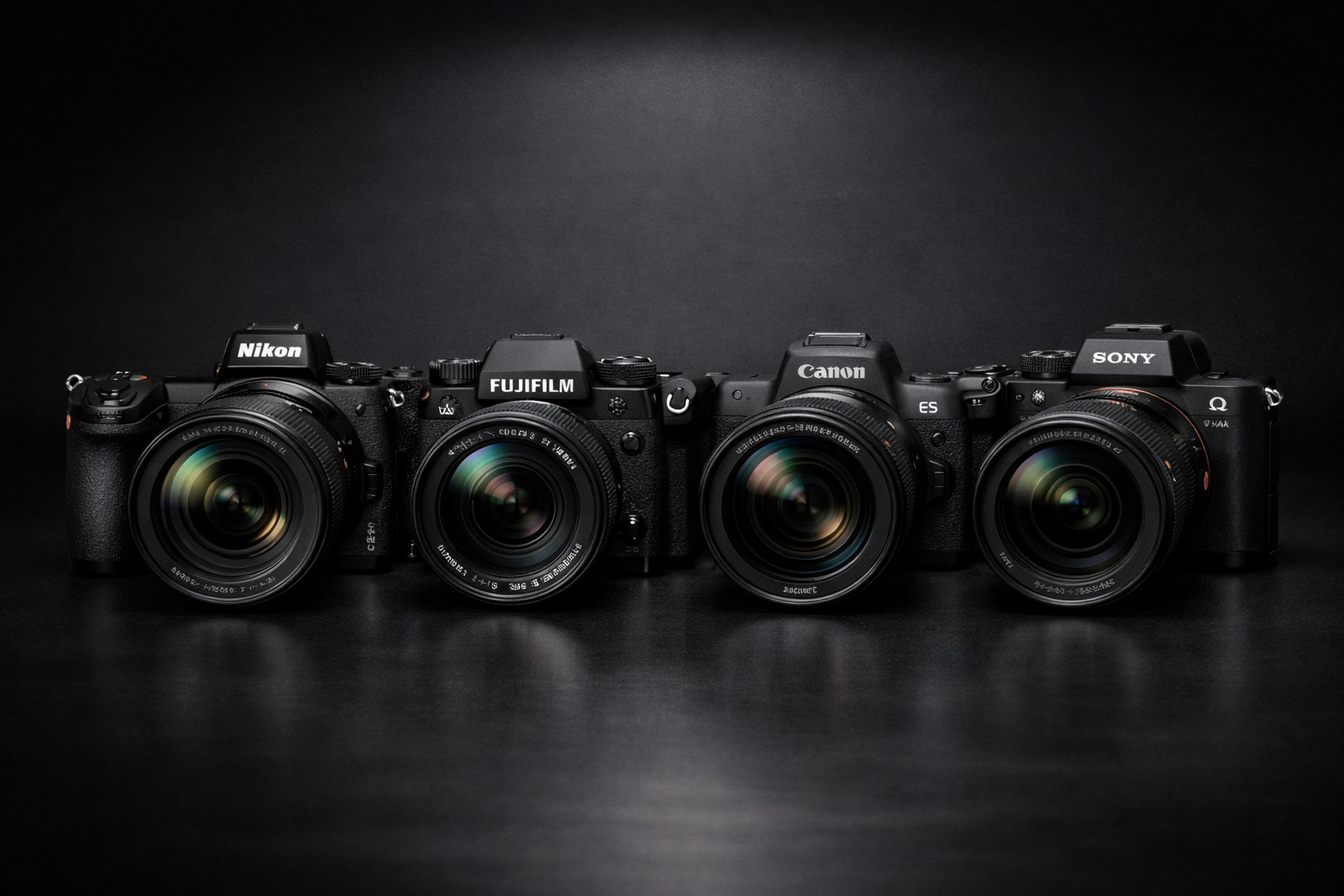
Popular DSLR systems from Canon and Nikon built the standard for professional photography.
Photographers who learned photography before the mirrorless era often still appreciate the familiar handling of DSLR cameras.
Understanding Mirrorless Cameras
A mirrorless camera removes the internal mirror. Light passes directly through the lens to the image sensor. The camera displays the image digitally in the electronic viewfinder or rear screen.
Mirrorless systems have become increasingly popular because they offer:
- Smaller body size
- Faster autofocus
- Silent shooting
- Better video tools
- Real-time exposure preview
Brands such as Sony, Canon, and Fujifilm continue expanding mirrorless technology.
The growth of mirrorless systems has changed the way professionals approach both photo and video production.
Sensor Performance in 2026
The quality of a camera sensor matters more than the camera type itself. In 2026, modern sensors in both DSLR and mirrorless systems produce excellent results.
Key improvements now include:
- Better low-light performance
- Improved dynamic range
- Higher resolution
- Faster readout speeds
- Reduced image noise
Many full-frame mirrorless cameras now outperform older DSLR bodies in difficult lighting. Skin tones appear more natural. Shadows hold more detail. Highlights remain cleaner.
Some professional DSLR cameras still deliver outstanding image quality, but mirrorless models are leading in sensor innovation.
For photographers focused on image quality alone, the gap between systems is smaller than it once was.
Autofocus Technology
Autofocus is one of the biggest differences in the mirrorless vs DSLR debate.
DSLR Autofocus
DSLR cameras use a separate autofocus module. This system performs well in traditional photography but can struggle during live view or video.
Mirrorless Autofocus
Mirrorless cameras use on-sensor autofocus points across the frame. In 2026 many systems now include:
- Eye detection autofocus
- Animal tracking
- Vehicle recognition
- Face tracking
- Subject prediction
This gives mirrorless cameras a major advantage for:
- Wedding photography
- Wildlife photography
- Sports photography
- Portrait photography
Fast-moving subjects are easier to track. Focus remains sharp even when the subject changes direction quickly.
For professionals who rely on speed, mirrorless often wins.
Viewfinder Experience
The viewfinder changes how a photographer interacts with the camera.
Optical Viewfinder in DSLR
A DSLR gives a direct optical view through the lens. Some photographers prefer this because:
- It feels natural
- No digital lag
- Clear in bright sunlight
- Less eye strain for some users
Electronic Viewfinder in Mirrorless
Mirrorless cameras use digital viewfinders that show:
- Exposure preview
- White balance preview
- Histogram display
- Focus peaking
- Real-time adjustments
This helps photographers see the final image before pressing the shutter.
For beginners, this can make learning easier. For professionals, it improves efficiency during paid shoots.
Camera Size and Weight
One major reason photographers switch to mirrorless is portability.
DSLR bodies are usually:
- Larger
- Heavier
- Bulkier
Mirrorless cameras are:
- Smaller
- Lighter
- Easier for travel
A lighter system reduces fatigue during:
- Destination weddings
- Street photography
- Hiking sessions
- Long events
Photographers carrying gear for several hours often appreciate the smaller design of mirrorless cameras.
Compact systems also attract content creators who need mobility.
Battery Performance
Battery life remains one area where DSLR cameras still perform well.
DSLR Advantage
A DSLR can often shoot:
- 1000 to 1500 photos per charge
Mirrorless Average
Mirrorless usually delivers:
- 300 to 700 photos per charge
Electronic viewfinders consume more power because they constantly display information.
Photographers who shoot all day without charging may still prefer DSLR reliability.
Many professionals solve this issue by carrying extra batteries.
Battery performance matters depending on shooting style.
Lens Selection
Lens availability can affect long-term value.
DSLR Lens Ecosystem
DSLR systems have decades of lenses available:
- Wide-angle
- Macro
- Telephoto
- Portrait
- Specialty lenses
Mirrorless Lens Growth
Mirrorless systems now offer:
- Sharper optics
- Better edge quality
- Faster focusing
- Smaller lens designs
Brands are investing heavily in mirrorless lens development.
Older DSLR lenses can often work on mirrorless bodies with adapters, allowing photographers to keep existing equipment.
This makes upgrading easier for professionals.
Video Capabilities
Video performance has become essential in 2026.
Many clients now request:
- short films
- social media reels
- commercial video
- behind-the-scenes footage
Mirrorless cameras usually offer:
- 4K and 8K recording
- Better stabilization
- Advanced autofocus
- Log profiles
- Better audio options
DSLR cameras can record video, but many feel outdated compared to modern mirrorless systems.
Photographers who also create video usually benefit more from mirrorless.
Durability and Reliability
Professional photographers need equipment they can trust.
DSLR cameras are known for:
- Strong build quality
- Weather sealing
- Mechanical durability
Mirrorless cameras have improved significantly in recent years.
Premium mirrorless bodies now offer:
- Magnesium alloy construction
- Dust resistance
- Moisture protection
- Strong shutter systems
For professional use, both systems can perform well.
The difference now depends more on the specific model than the camera type.
Cost Comparison in 2026
Price matters when choosing a camera system.
DSLR Pricing
Because DSLR demand has dropped:
- Used bodies can be affordable
- Professional lenses can cost less
- Entry-level kits offer value
Mirrorless Pricing
Mirrorless often costs more because:
- Newer technology
- Higher demand
- Better features
- New lens systems
Budget-conscious photographers may still find DSLR better for saving money.
Professionals planning long-term growth may see mirrorless as a stronger investment.
Who Should Choose a DSLR?
A DSLR may still be right for photographers who:
- Prefer optical viewfinders
- Need long battery life
- Already own DSLR lenses
- Want lower investment cost
- Prefer traditional camera handling
Some photographers simply enjoy the shooting experience of DSLR cameras.
That experience still matters.
Who Should Choose Mirrorless?
Mirrorless is often better for photographers who:
- Need fast autofocus
- Shoot video regularly
- Travel frequently
- Want lighter equipment
- Need modern features
- Want future-ready technology
Most camera brands are now focusing development on mirrorless systems.
That makes mirrorless a stronger long-term choice.
The Future of Photography Systems
Camera manufacturers continue shifting toward mirrorless technology.
Major brands now release more mirrorless bodies than DSLR models.
Artificial intelligence is also becoming a bigger part of photography through:
- Smart autofocus
- Subject recognition
- Noise reduction
- Scene optimization
Mirrorless systems are designed to support these advancements more effectively.
This suggests mirrorless will continue leading the market.
Final Verdict: Mirrorless vs DSLR in 2026
The answer depends on your needs.
If you value:
- battery life
- lower cost
- classic handling
A DSLR can still be a strong choice.
If you value:
- speed
- portability
- advanced autofocus
- video performance
- future upgrades
Mirrorless is often the better option.
For many photographers in 2026, mirrorless vs DSLR is no longer just a comparison of two camera types. It is a decision between tradition and innovation.
Professionals who want to stay competitive often lean toward mirrorless.
Photographers who love reliability may still choose DSLR.
The best camera remains the one that fits your creative vision.
Frequently Asked Questions
Are mirrorless cameras better than DSLR cameras in 2026?
Mirrorless cameras usually offer better autofocus, portability, and video features, making them the preferred choice for many photographers.
Do professional photographers still use DSLR cameras?
Yes, some professionals still use DSLR cameras because of battery life and familiarity.
Is DSLR becoming outdated?
DSLR cameras are becoming less common as brands focus more on mirrorless technology.
Is mirrorless worth the higher price?
For many photographers, the extra features justify the cost.
Conclusion
Choosing between mirrorless vs DSLR depends on the type of photography you do and the experience you want behind the camera.The right choice comes from understanding how each camera supports your work, your clients, and your future as a photographer.
Capture Every Detail with Professional Photography That Elevates Your Brand
At The Focus Craft, we provide premium photography services designed to help businesses, brands, and individuals present their story with clarity and impact. From real estate photography that makes properties stand out, to event photography that preserves unforgettable moments, and product photography that drives customer attention, every image is created with purpose.
Our platform also shares expert photography insights, creative techniques, and industry knowledge to help clients understand the value behind professional visual content.