
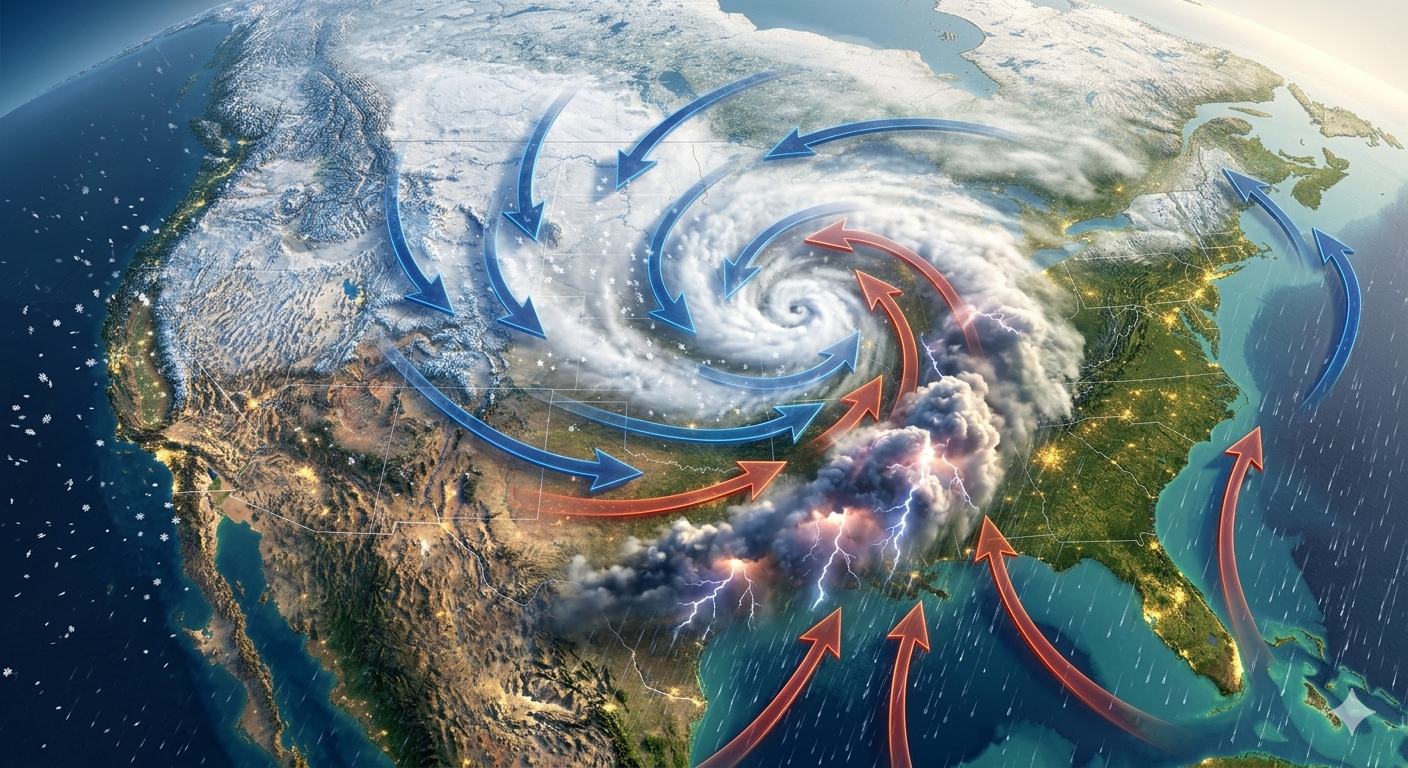
March Megastorm to Threaten Huge Parts of the U.S. with Blizzard, Severe Storms and Dangerous Winds
Meteorologists are tracking an unusually powerful March megastorm expected to impact vast areas of the United States with a dangerous mix of weather conditions. The system could bring heavy snow, blizzard conditions, severe thunderstorms, strong winds, and flooding rain over several days, affecting hundreds of millions of people.
This sprawling storm system is forming as cold winter air clashes with warmer spring air moving northward. As it progresses eastward, the storm will bring dramatically different weather types across regions — snow and ice in the north, and severe conditions farther south and east.
Blizzard Conditions in the North
In the northern Plains and parts of the Upper Midwest, the storm is forecast to produce heavy snow and blizzard conditions. Strong winds could lead to whiteout conditions, where visibility drops to near zero. These conditions make travel extremely hazardous on roads and highways, and drivers are advised to avoid unnecessary travel.
Snow accumulation may be significant in some areas, piling up quickly and making it difficult for snowplows and emergency response teams to keep roads clear.
Severe Thunderstorms and Tornado Risk
Farther south, where temperatures are warmer ahead of the storm, there is a risk of severe thunderstorms capable of producing tornadoes, large hail, and damaging winds. Storm cells could develop rapidly, posing a threat to homes, power lines and transportation.
Severe weather threats may occur both during the daytime and late into the night, making it important for residents to stay alert and monitor weather updates.
Heavy Rain and Flooding Possibility
Central and eastern states may receive heavy rainfall, increasing the risk of flash flooding in low‑lying areas. Rivers and streams that are already high from earlier seasonal runoff could rise further, threatening communities near flood‑prone areas.
Flooding can quickly overwhelm roadways and drainage systems, making travel hazardous and potentially damaging property.
Strong and Damaging Winds
This storm is also expected to produce gusty and damaging winds over a wide area. In some regions, dry, strong winds may contribute to wildfire risk where vegetation is dry. Strong winds can also uproot trees, knock down power lines and cause widespread power outages.
Residents should secure outdoor furniture and other loose objects that could become dangerous projectiles in high wind gusts.
Travel and Safety Impacts
Given the wide range of weather hazards, travel may be severely affected. Airports, highways, and public transportation systems could face major disruptions. Travelers should prepare for delays and cancellations and check conditions before departure.
Communities impacted by blizzard conditions, severe weather, or flooding should prepare emergency supplies, battery‑powered lights, and alternative heating sources in case of long power outages.
Storm Duration and Aftermath
This megastorm is expected to move across the country over several days, bringing extreme conditions at different stages. Cold Arctic air trailing behind the system will likely send temperatures well below seasonal averages even after the worst weather has passed. This could prolong hazardous conditions, especially for northern and central regions.
Meteorologists emphasize that powerful storm systems like this are more common during seasonal transitions, when warm and cold air masses collide. The size and intensity of this storm showcase how early spring weather can produce a wide variety of hazards across different regions at the same time.
FAQs
1. What is this storm system?
It is a large, multi‑day storm expected to bring snow, blizzard conditions, severe thunderstorms, strong winds and heavy rain across much of the United States.
2. Which areas are most at risk?
The storm is forecast to affect a broad region, with blizzard conditions in the north and severe weather, flooding rain and wind threats in central and eastern areas.
3. What hazards should people prepare for?
Potential hazards include heavy snow, whiteout conditions, tornadoes, flooding, damaging winds and power outages.
4. How can people stay safe?
Monitor local weather updates, prepare emergency supplies, secure loose outdoor items, and avoid travel when hazardous conditions are expected.
5. Why is the storm so widespread?
Seasonal transitions create conditions where cold and warm air masses interact strongly, producing a storm system capable of delivering multiple types of extreme weather events across a large area.