
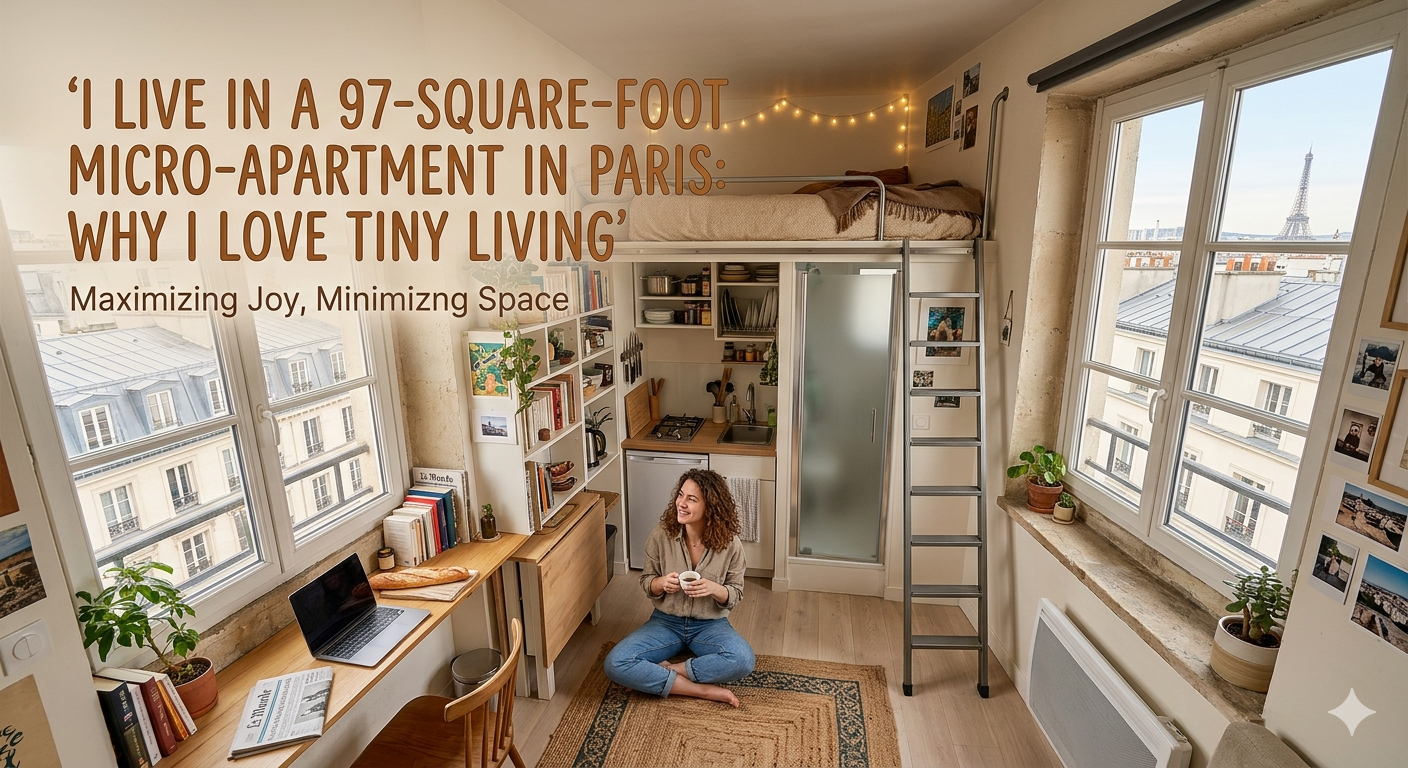
I Live in a 97-Square-Foot Micro-Apartment in Paris: Why Tiny Living Changed My Life
Living in a 97-square-foot (about 9-square-meter) micro-apartment in Paris may sound extreme, but for many people in big cities, this type of housing is becoming more common. These small living spaces, often called micro-apartments, are designed to maximize functionality in minimal square footage, offering just enough room for sleeping, cooking, and basic daily life.
In this case, what started as a temporary living arrangement slowly turned into a long-term lifestyle choice. Instead of feeling restricted, the experience has reshaped how the resident views comfort, freedom, and happiness in a modern city.
What a 97-Square-Foot Apartment Actually Looks Like
A space this small typically includes only the essentials:
- A single bed or foldable sleeping area
- A compact kitchenette
- Minimal storage space
- Shared or hallway bathroom access in some buildings
According to definitions of micro-apartments, these units are usually under 150–350 square feet and are designed to prioritize efficiency over spaciousness. In Paris, many of these units are former “chambre de bonne” maid’s rooms located at the top of older residential buildings.
Even though the space is extremely limited, it is often located in central neighborhoods, making it highly desirable for students, freelancers, and young professionals.
Why Tiny Living Works in a Big City Like Paris
One of the biggest advantages of micro-living is location. In cities like Paris, rent in central areas is extremely expensive, but micro-apartments offer a way to live in prime locations at a lower cost.
Some key benefits include:
- Lower rent compared to standard apartments
- Walking distance to major landmarks and transport
- Simpler lifestyle with fewer possessions
- Easier cleaning and maintenance
- Greater independence in the city center
For many residents, the trade-off between space and location feels worth it.
How Living Small Changes Daily Habits
A 97-square-foot space naturally influences behavior and lifestyle. With limited room indoors, residents often spend more time outside their home.
This leads to lifestyle changes such as:
- Spending more time in cafés, libraries, and gyms
- Becoming more socially active
- Reducing unnecessary purchases
- Focusing on experiences instead of material items
- Developing stronger routines outside the home
Instead of feeling trapped, the small space can encourage a more active and connected lifestyle.
Minimalism Becomes a Necessity, Not a Choice
In a micro-apartment, there is no room for clutter. Every item must have a purpose.
This naturally leads to a minimalist lifestyle where:
- Clothing collections are smaller and more intentional
- Furniture is multifunctional or compact
- Storage is highly optimized
- Unused items are quickly removed
Over time, this approach often changes how people think about consumption and material possessions.
The Psychological Shift of Tiny Living
While small spaces can feel challenging at first, many people eventually adapt and even prefer them.
The psychological benefits often include:
- Less stress from maintaining a large home
- Increased appreciation for shared city spaces
- A stronger sense of freedom and mobility
- Less financial pressure from rent and utilities
However, it can also require adjustment, especially for people who value privacy or personal space.
Challenges of a 97-Square-Foot Home
Despite its benefits, micro-living is not without difficulties.
Common challenges include:
- Limited privacy and personal space
- Lack of storage for belongings
- Feeling confined during long indoor periods
- Sharing facilities in some buildings
- Difficulty hosting guests
These challenges explain why micro-apartments are often seen as temporary solutions—although many people end up staying longer than expected.
Why Some People End Up Loving It
What surprises many residents is how quickly they adapt to such a small space. Instead of focusing on what is missing, they begin to value what the lifestyle offers:
- Central city access
- Financial flexibility
- Simplicity and order
- Freedom from excess possessions
- More time spent outside the home
Over time, the apartment becomes less of a limitation and more of a base for living an active urban life.
The Bigger Trend: Micro-Living in Global Cities
Tiny apartments are not unique to Paris. Around the world, cities like Tokyo, New York, and Hong Kong also feature extremely compact housing due to rising property prices and population density.
This global trend shows:
- Increasing demand for affordable city housing
- Growth of minimalist and flexible lifestyles
- Rising acceptance of non-traditional living spaces
- Creative architectural solutions for small homes
Micro-living is becoming part of modern urban reality rather than an exception.
Conclusion
Living in a 97-square-foot micro-apartment in Paris may seem restrictive at first, but for many people it becomes a surprisingly rewarding experience. While the space is extremely limited, the lifestyle it enables—central location, simplicity, and freedom—can outweigh the challenges.
What begins as a temporary solution can evolve into a long-term mindset shift, where happiness is no longer tied to the size of a home but to the quality of life built around it.
FAQs
What is a micro-apartment?
A micro-apartment is a very small self-contained living space, usually under 350 square feet, designed for efficient urban living.
Is 97 square feet enough to live in?
Yes, but it requires minimal belongings, strong organization, and a willingness to spend more time outside the home.
Why do people live in micro-apartments in Paris?
Mainly due to high rent prices in central areas and the desire to live close to work, transport, and city life.
What are the benefits of tiny living?
Lower costs, simpler lifestyle, easier maintenance, and access to prime urban locations.
What are the disadvantages?
Limited space, less privacy, storage issues, and difficulty hosting guests.
Do people stay in micro-apartments long-term?
Some do, especially if they value location and simplicity over space.
Is tiny living becoming more popular?
Yes, especially in major cities with high housing costs and limited space.
Ready to Elevate Your Photos?
At TheFocusCraft, we understand the power of professional imagery. Whether you’re a traveler, influencer, or storyteller, quality visuals define your brand.
If you love how Flytographer transforms memories into masterpieces, imagine what our creative team can do for your next photography project.
👉 Partner with TheFocusCraft today — where every frame tells a story worth remembering.