How AI Product Photography Is Redefining Visual Marketing in 2026
In 2026, AI product photography isn’t just a buzzword — it’s rapidly becoming a core part of how brands approach visual marketing. As ecommerce dominates global retail, businesses must produce high-quality visuals quickly, consistently, and at scale. Traditional photography — with its time-consuming shoots, studio setups, and long post-production timelines — is no longer agile enough to satisfy the fast-moving demands of modern digital commerce.
By harnessing artificial intelligence and advanced image generation tools, companies can now create professional-grade product images with remarkable speed, customization, and cost savings, reshaping the competitive landscape of online marketing.
Why Visual Content Still Matters (But Has Evolved)
Product imagery has always been central to consumer decision-making. From old catalog photography to today’s ecommerce galleries, images build trust, showcase product details, and influence purchasing behavior.
But the rise of online shopping — with its need for multiple visuals across websites, marketplaces, social platforms, ads, and mobile feeds — has dramatically increased the volume of assets brands must produce. Traditional photography setups often take weeks and significant budgets to complete.
In contrast, AI product photography tools let businesses generate studio-quality visuals in a fraction of the time, often without expensive physical shoots.
Speed and Agility Are Competitive Advantages
In 2026’s fast-paced markets, speed is more than a convenience — it’s a competitive edge. AI-driven visuals help brands:
- Launch product imagery instantly
- Modify designs quickly for seasonal campaigns
- Create multiple variations for split-testing
- Localize visual content without reshoots
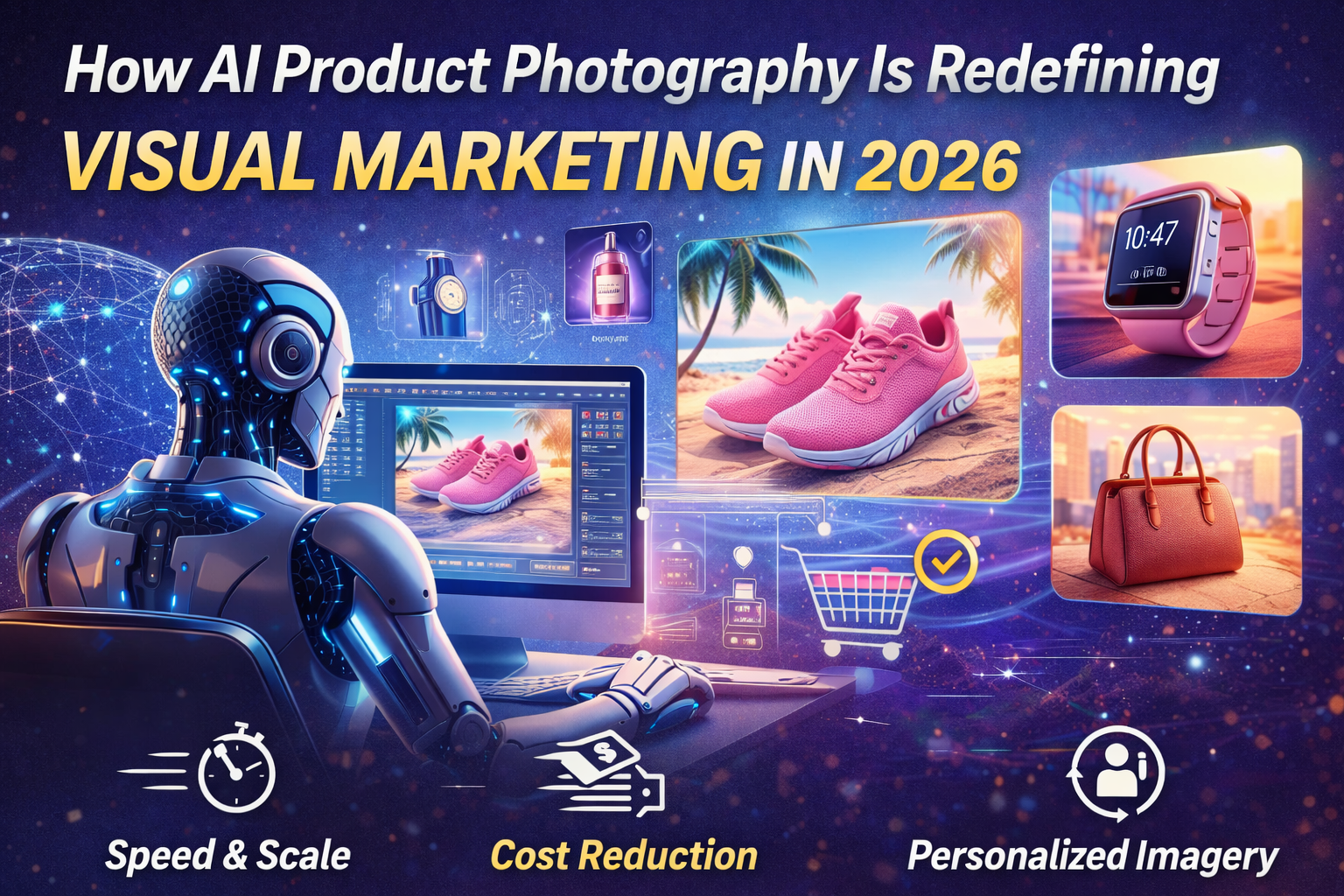
With these capabilities, a single product can be displayed in vastly different environments — city streets, beach scenes, modern interiors — all without physically moving the product. This agility dramatically shortens go-to-market timelines and empowers teams to keep up with shifting consumer trends.
Cutting Costs Without Compromising Quality
Traditional product photography often involves expenditures on:
- Studio rentals
- Lighting equipment
- Professional photographers
- Models and props
- Editing and retouching
AI workflows can automate many of these processes, allowing brands — especially small and medium enterprises — to produce high-quality images at a fraction of the cost with minimal manual effort.
This democratization of visual production levels the playing field, enabling startups and independent sellers to compete with large corporations in terms of image quality and content output.
Personalization: Tailoring Images for Every Audience
One of the biggest advantages of AI product photography is its ability to personalize visuals at scale. Brands can create customized versions of product imagery tailored to specific regions, demographics, or browsing behaviors.
For example:
- Showing lifestyle product variants based on a shopper’s location
- Creating seasonal visuals for different markets
- Displaying demographic-specific imagery that resonates with distinct audience segments
This level of personalization wasn’t feasible with traditional studio photography — but AI makes it easy and efficient, significantly improving relevance and engagement.
Boosting Ecommerce Conversions with Better Imagery
Product visuals do more than look good — they play a direct role in conversion rates. In online shopping, customers can’t physically touch or handle products, so the images must fill that sensory gap.
AI-generated images can:
- Improve lighting and clarity
- Enhance product detail
- Show context and realistic usage scenarios
- Optimize color accuracy and texture depth
These improvements build trust, reduce uncertainty, and increase the likelihood of a purchase — all crucial for a successful ecommerce strategy.
Scaling Across Omnichannel Marketing
Today’s brands operate across multiple channels — from ecommerce sites and marketplaces to social media campaigns and email promotions. Each channel has its own format requirements and visual standards.
AI product photography tools allow for:
- Rapid resizing and reformatting
- Background modification for different platforms
- Conversion of one image into multiple styles and formats
This ensures visual consistency across all touchpoints, strengthening brand identity while maximizing performance on each platform.
Sustainability and Reduced Environmental Impact
Traditional product shoots often involve shipping products, constructing physical sets, and using props — all of which generate waste and carbon emissions.
AI product photography reduces reliance on physical resources, cuts down on travel and logistics, and minimizes environmental impact. For brands that emphasize sustainability as part of their values, this digital approach aligns with modern corporate responsibility goals.
Creative Freedom Beyond Physical Limits
AI opens up creative possibilities that traditional studios simply can’t match:
- Placing products in imaginary or exotic environments
- Creating stylized artistic contexts
- Experimenting with unreal themes without logistical constraints
This creative freedom allows marketing teams to push boundaries and explore new visual storytelling techniques — expanding what’s possible beyond real-world photography.
The Future: Data-Driven Visual Performance
AI doesn’t just generate images — it can also analyze how visuals perform. By tracking engagement metrics, brands can quickly see which styles or designs convert better and make data-backed visual decisions rather than relying on intuition.
This feedback loop turns visual marketing into a measurable, iterative process instead of a one-time creative effort.
Conclusion: The New Standard in Visual Marketing
In 2026, AI product photography is reshaping visual marketing by offering brands speed, scalability, personalization, and measurable performance. It significantly reduces costs and accelerates production cycles while enabling customized, channel-ready imagery that resonates with consumers.
Whether for ecommerce galleries, social media campaigns, or personalized ads, AI-powered visuals are no longer optional — they are central to a competitive digital strategy. Brands that adopt these technologies thoughtfully will find themselves ahead in the marketplace, turning product imagery into a strategic advantage.
Frequently Asked Questions (FAQs)
Q1: What is AI product photography?
AI product photography uses artificial intelligence to generate or enhance product images without the need for extensive studio shoots, making visual content creation faster and less costly.
Q2: How does AI improve ecommerce conversion rates?
By producing high-quality, detailed, and context-relevant visuals, AI images reduce uncertainty and build trust, helping turn views into purchases.
Q3: Can AI images be customized for different audiences?
Yes — AI tools can generate personalized visuals based on region, demographics, shopping behavior, or platform requirements.
Q4: Does AI product photography reduce costs?
Yes — AI significantly cuts expenses associated with studio costs, models, equipment, and lengthy editing processes.
Q5: Are there limitations to AI product photography?
While powerful, AI sometimes struggles with perfect realism and consistency, so brands often combine it with traditional photography to achieve the best results.