
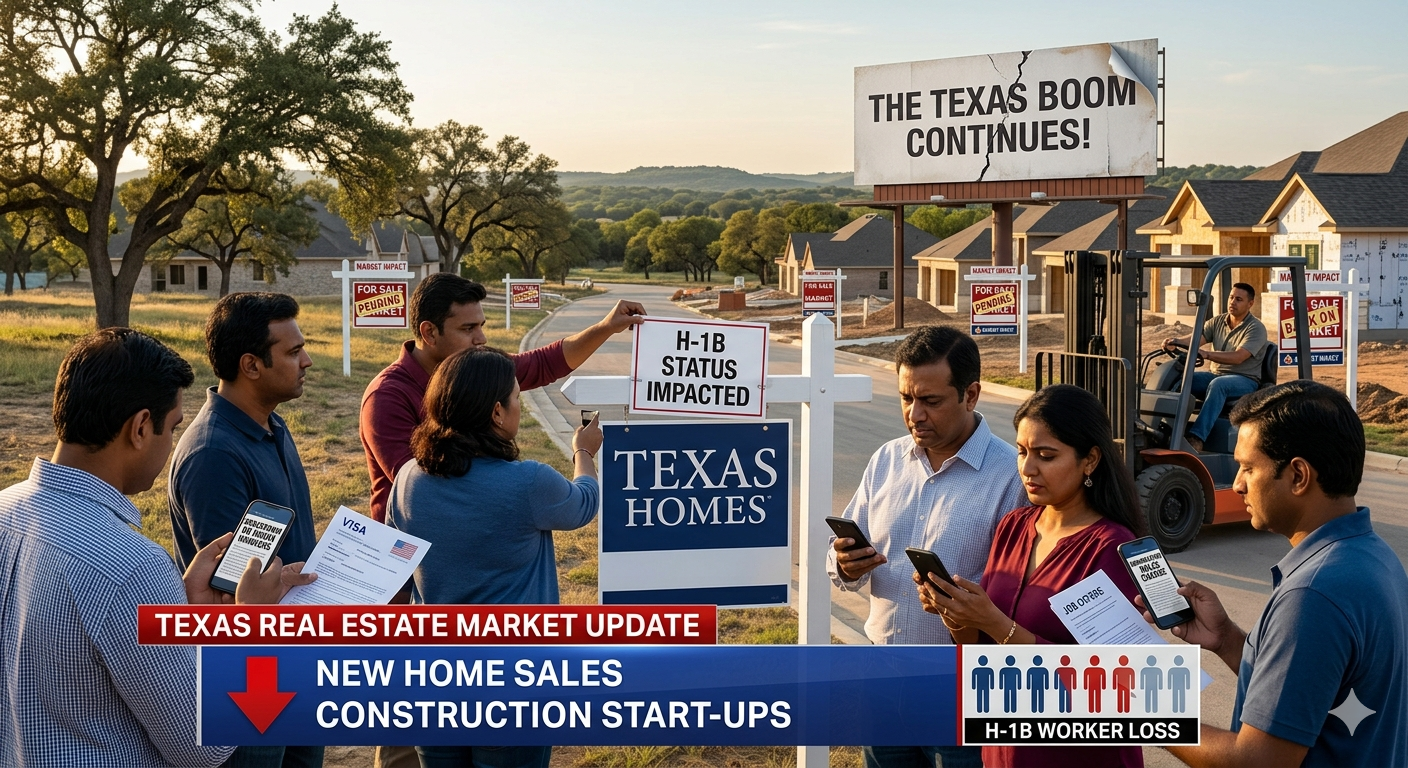
H-1B Crackdown on Indian Workers Erodes a Texas Real Estate Boom
A tightening of H-1B visa rules targeting foreign skilled workers is starting to reshape housing demand in parts of Texas, where Indian tech professionals have played a key role in driving a real estate boom. The slowdown in new visa approvals and increased uncertainty around renewals is now cooling demand in fast-growing suburban housing markets.
The shift highlights how immigration policy, technology hiring, and local property markets are deeply interconnected in high-growth US metro areas.
H-1B Policy Pressure Hits Tech Workforce
Recent changes in US immigration enforcement and policy scrutiny have made it harder for companies to sponsor foreign skilled workers, particularly in the technology sector.
State-level and federal-level actions include:
- Stricter H-1B visa approvals and renewals
- Increased scrutiny of visa-dependent employers
- Policy uncertainty affecting long-term relocation decisions
H-1B visa program has long been a major pathway for Indian engineers and IT professionals working in the United States, especially in Texas tech hubs.
Impact on Texas Housing Demand
In cities like Dallas, Plano, Frisco, and surrounding suburbs, Indian professionals have been a significant driver of home purchases over the past decade. This demand helped fuel rapid home price growth in suburban Texas markets.
However, with visa uncertainty rising:
- Fewer new long-term relocations are taking place
- Some workers are delaying home purchases
- Rental demand is becoming more dominant than buying
This shift is starting to cool parts of the Texas housing boom that were heavily supported by skilled immigrant inflows.
From Boom to Slowdown
The Texas real estate surge was built on a combination of:
- Strong tech hiring in the region
- Large inflows of H-1B workers
- Affordable suburban housing compared to coastal cities
Now, that formula is being disrupted as companies adjust hiring strategies and immigration rules tighten.
At the same time, broader economic factors like interest rates and housing costs are also adding pressure, amplifying the slowdown.
AI and Hiring Changes Add Pressure
Beyond immigration policy, the rise of artificial intelligence is reshaping hiring demand in the tech sector. Some firms are reducing offshore and visa-based hiring while shifting toward automation and AI-driven workflows.
This adds another layer of uncertainty for foreign workers planning long-term settlement in the US housing market.
Market Outlook for Texas Real Estate
Analysts expect the housing market in Texas to remain active but more balanced compared to the previous boom cycle. Key factors influencing the outlook include:
- Future changes to immigration policy
- Tech sector hiring trends
- Interest rate movements
- AI-driven workforce restructuring
FAQs
Why is the H-1B crackdown affecting Texas housing?
Because many Indian tech workers on H-1B visas have been major homebuyers in Texas suburbs, and reduced visa flow lowers housing demand.
Which cities are most impacted?
Dallas, Plano, Frisco, and surrounding suburban areas that saw strong tech-driven population growth.
Is the Texas housing boom ending?
Not completely, but growth is slowing as immigration-driven demand cools and economic conditions tighten.
Are only Indian workers affected?
No, the H-1B program covers multiple nationalities, but Indian professionals make up a large share of recipients.
What other factors are affecting the housing market?
Higher interest rates, affordability issues, and AI-driven changes in tech hiring are also influencing demand
Stay Ahead in Creative Trends
At The FocusCraft, we believe design goes beyond aesthetics—it’s about understanding cultural and economic shifts that inspire creativity.
Stay ahead of the creative curve.
Subscribe to our newsletter for insights on design, innovation, and creative trends shaping tomorrow.