
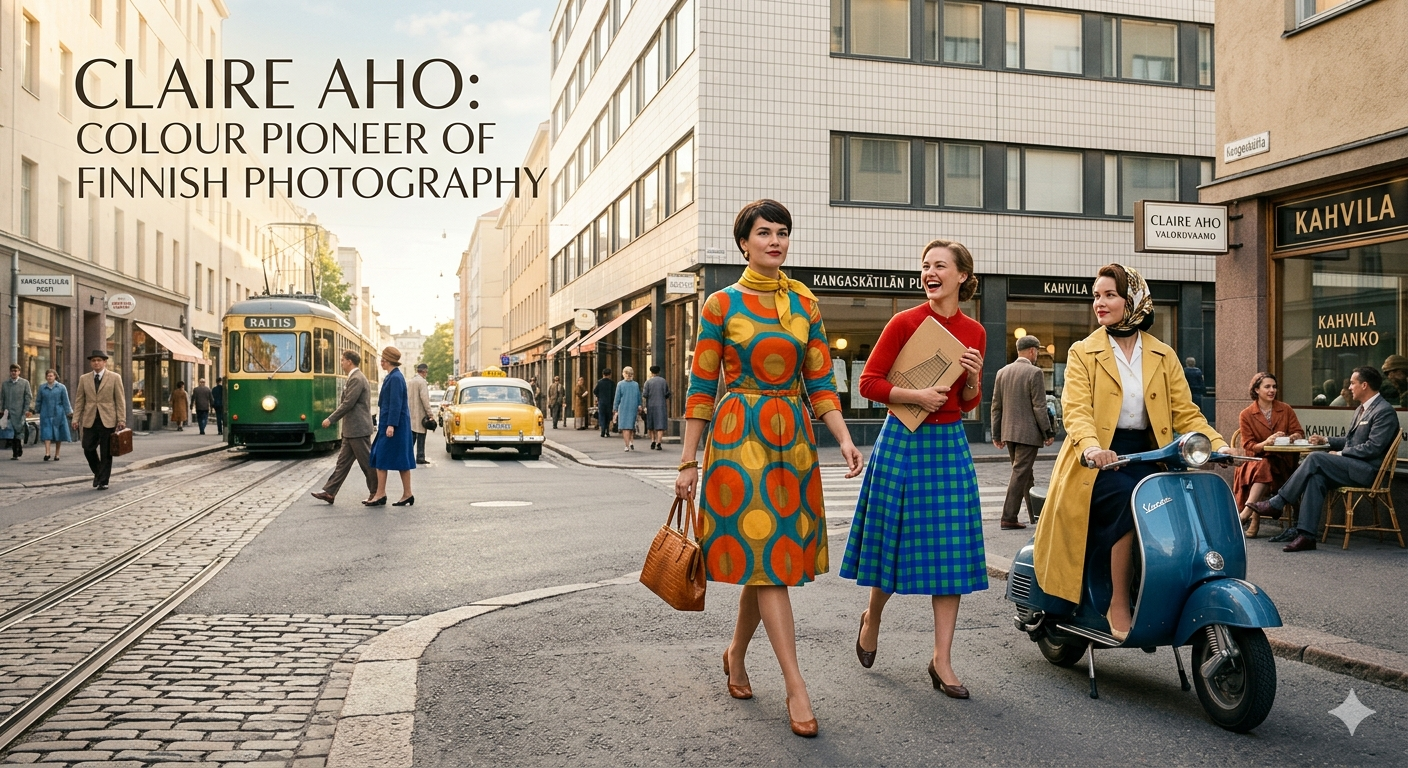
Finnish Up! Claire Aho’s Colour Revolution in Pictures
A celebration of mid‑20th-century photography shines a spotlight on Claire Aho, Finland’s most influential colour photographer. Revered as a pioneer who brought vibrancy, wit, and visual eloquence to post-war image-making, Aho’s photographs capture a world in transformation — one defined by optimism, design innovation, and emerging consumer culture.
At the heart of this revival is her unique ability to harness colour not merely as pigment, but as a contemporary language capable of defining an era. Born in 1925 into a family deeply embedded in the visual arts, Aho’s career spanned decades, from documentary filmmaking to commercial photography, shaping Finnish visual culture in the 1950s and 1960s.
A New Lens on Post-War Finland
After World War II, Finland experienced rapid social and cultural change. Against this backdrop, Aho’s photographs stood apart from the stark black-and-white images dominating the photographic landscape. She embraced colour fully, using saturated hues to celebrate both everyday life and high-fashion aesthetics. Her subjects ranged from elegantly posed models to street scenes reflecting urban modernity’s lively pulse.
This choice was not just stylistic. At a time when colour film was still gaining critical acceptance, Aho saw its possibilities as a tool for capturing mood, style, and nuance. Her compositions — whether editorial portraits or commercial advertisements — radiated energy and confidence, marking a departure from traditional photographic norms.
Reinventing Visual Storytelling
Aho’s work demonstrates a deep understanding of composition, pattern, and design. Models are often placed against bold backdrops, textures, and props, creating images that feel meticulously constructed yet spontaneous. Colour is never incidental; it is central to how the photograph communicates.
Her editorial work in women’s magazines showcased new notions of femininity, style, and sophistication emerging across Scandinavia and Europe. In commercial contexts, her advertising photography helped brands articulate a new cultural confidence as Finland’s consumer markets expanded. The colours of textiles, sweets, and household products leap off the frame, suggesting an upbeat post-war spirit that was both psychological and aesthetic.
A Female Vision in a Male-Dominated Field
Photography in the 1950s and ’60s was largely male-dominated, particularly in commercial and editorial spheres. Yet Aho emerged as a significant practitioner and a leader in her field. She controlled every aspect of her work — from casting to lighting to printing — asserting a creative autonomy rare for women of her time.
Her eye for colour and composition earned her assignments across magazines and advertising campaigns, and her studio became known for its inventive approach. Aho’s ability to blend humour, elegance, and technical precision solidified her reputation as a pioneer of colour photography in Finland.
The Exhibition Experience
Current exhibitions celebrating Aho’s work invite viewers into a richly textured visual world. From portraits of confident, stylish individuals to intimate still lifes populated with objects of domestic life, each image reveals mastery of colour, form, and narrative rhythm.
Exhibition rooms are often arranged thematically, allowing visitors to wander through visual motifs that recurred in Aho’s work — vibrant textiles, striking architectural forms, fashion details, and scenes of Finnish urban life. These arrangements illuminate not only her technical skill but her intuitive grasp of how colour can shape mood and meaning.
Beyond the Frame
What sets Aho’s work apart is how it balances artistry with accessibility. Her pictures speak both to those who appreciate technical brilliance and to those drawn by the sheer pleasure of visual expression. In editorial and commercial contexts, Aho consistently demonstrated that photography could be a vehicle for both storytelling and aesthetic innovation.
Her legacy continues to influence photographers and visual artists today, inspiring new generations to see colour, composition, and subject as interconnected elements of visual storytelling.
FAQs
Q1: Who was Claire Aho?
Claire Aho was a Finnish photographer born in 1925, known for pioneering colour photography in Finland and for her work in fashion, editorial, and advertising throughout the mid-20th century.
Q2: Why is her photography considered revolutionary?
Aho embraced colour photography at a time when it was still gaining acceptance, using saturated hues, striking composition, and inventive staging to redefine visual storytelling in post-war Finland.
Q3: What themes appear in her work?
Her images include magazine editorials, fashion portraits, commercial adverts, and street scenes, highlighting design, texture, style, and everyday life with wit and energy.
Q4: What impact did she have on women photographers?
As one of the few prominent women in her field during the 1950s and ’60s, Aho demonstrated creative leadership and artistic control, influencing future generations of women in photography.