
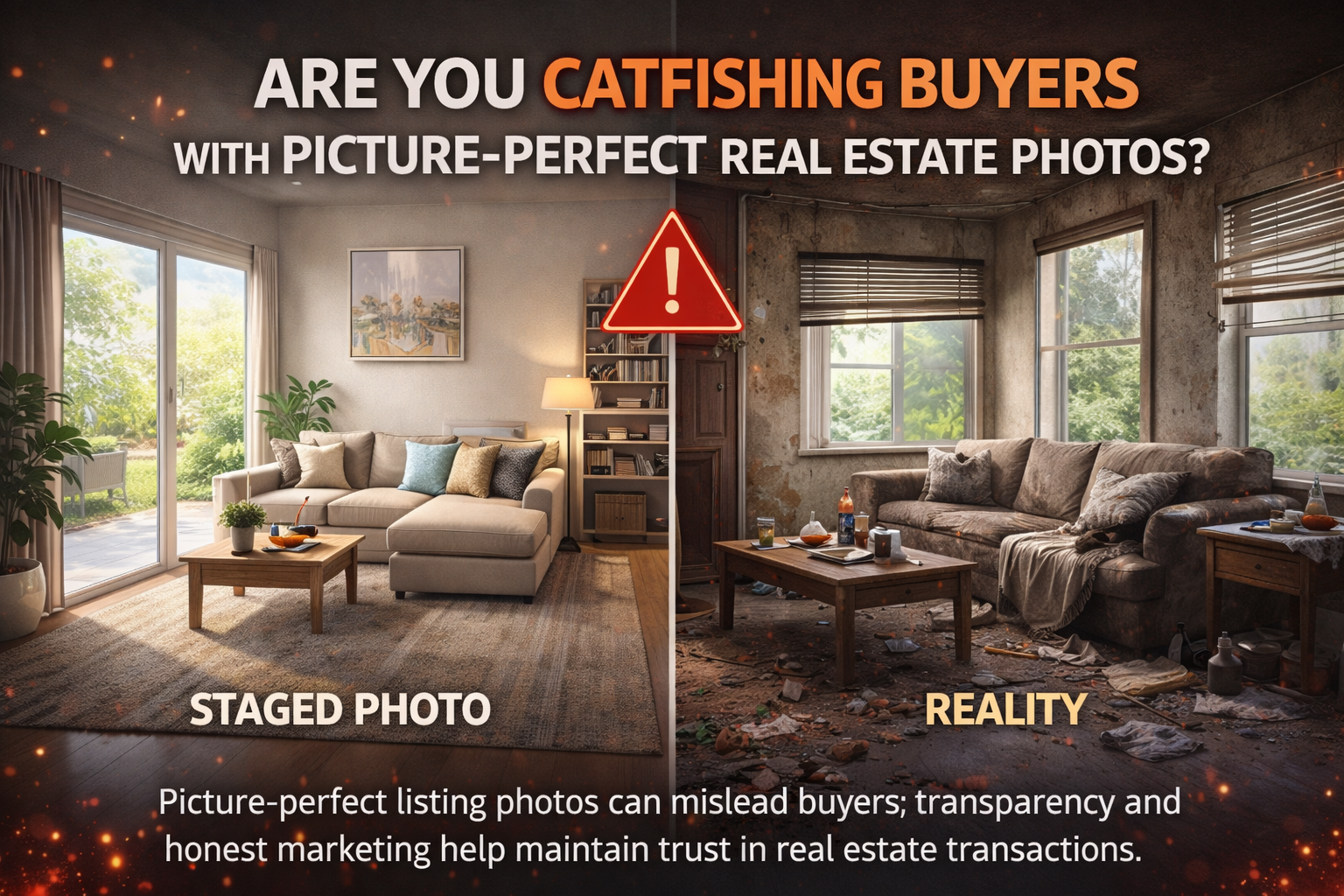
📸 When Real Estate Photos Don’t Match Reality
In today’s market, most homebuyers begin their search online — and listing photos often form their first impression of a property. But there’s a growing concern in the industry: many listings use highly polished, staged, or digitally enhanced images that make properties appear dramatically better than they are in person. This practice has been dubbed “catfishing” or “housefishing,” where photos lure buyers with unrealistic visions of a home.
Many buyers fall in love with what they see on their screens, only to feel let down when the actual property doesn’t match the online pictures. This disconnect can erode trust and lead to frustration for both buyers and sellers.
📉 The Problem with Picture‑Perfect Listings
Agents use a variety of tools to make listings eye‑catching, including wide‑angle lenses, twilight filters, virtual staging, and AI‑powered photo edits. These techniques can brighten rooms, enhance colors, and make spaces appear larger. They can even reimagine fixtures, furniture, and landscaping to create a more attractive visual.
However, when these edits obscure key flaws — such as poor lighting, cramped spaces, blocked views, or needed repairs — buyers may feel misled once they visit the property. This sense of disappointment can harm buyer confidence and make them less likely to trust future listings.
🧐 The Fine Line Between Marketing and Misleading
High‑quality photos play an important role in real estate marketing. Most buyers find listings with professional images more appealing and engaging, and homes with strong visuals tend to attract more attention. However, there’s a difference between showcasing a property’s best features and digitally altering images so much that they no longer represent the real space.
For example, lighting, cropping, and exposure adjustments can clarify a room’s appeal without misrepresenting it. But changing paint colors, removing elements, or inserting scenic views that aren’t present crosses the line into deception. When buyers show up expecting one thing and get another, trust is damaged.
🧠 Why Transparency Matters
Many real estate professionals emphasize the importance of transparency. When photos are altered, agents can clearly label them as enhanced or staged. This practice helps manage expectations while still using modern tools to help buyers visualize a space.
Experts also note that virtual staging — when done correctly — can help buyers imagine possibilities without disguising reality. The key is to complement online visuals with accurate descriptions and in‑person tours that align with what buyers saw online.
⚖️ Emerging Scrutiny and Best Practices
As digital editing tools become more powerful, some areas are considering rules to ensure that online listings remain honest. Industry codes of ethics already advise agents to avoid exaggeration or concealment of a property’s true condition. Being upfront about any digital enhancements not only protects buyers but also shields agents from potential misrepresentation claims.
Good practice includes:
- Labeling enhanced photos clearly
- Providing unaltered images side by side for comparison
- Using virtual staging responsibly to clarify space, not replace reality
- Being honest about a home’s condition in descriptions
Building trust through accurate, respectful marketing helps both buyers and sellers and maintains professional standards in the industry.
🏡 What Buyers Should Watch For
For buyers, spotting “catfishing” photos often means looking beyond glamorous visuals. Red flags can include overly staged scenes, perfect sunset shots that don’t match location conditions, or images that seem to hide structural issues. A good rule of thumb is to pay attention to house layouts, seek floor plans, and request virtual tours or walkthroughs before committing to a visit.
🧩 Conclusion
Picture‑perfect real estate photos can be a powerful marketing tool, drawing attention and generating interest. However, when photos blur the line between enhancement and misrepresentation, they can mislead buyers, waste time, and harm professional credibility.
Balancing compelling visuals with accurate portrayal and transparency ensures that listing photos attract the right buyers — not just dreams that disappear once the front door opens.
FAQ
Q1: What is “housefishing” in real estate?
Housefishing is when real estate listing photos mislead buyers by exaggerating or altering a property’s appearance.
Q2: How can real estate agents avoid misleading buyers?
Agents should clearly label staged or enhanced photos, provide unaltered images, and describe the property accurately.
Q3: What are virtual staging best practices?
Use virtual staging to help buyers visualize potential without hiding flaws or misrepresenting the property.
Call-to-Action
Want to stay ahead of AI trends reshaping the creative world?
Follow TheFocusCraft.com for weekly deep dives on design innovation, creative tools, and tech-powered storytelling